
What Is a 10 Panel Drug Test for Employers
More than 60 percent of American employers rely on drug screening to maintain a safe, compliant workplace. For HR professionals, staying current with evolving drug testing regulations is vital to minimize risk and protect company reputation. This guide breaks down the complexities of 10 panel drug tests, highlighting the substances detected, legal compliance factors, and smart approaches for accurate employee screening.
Table of Contents
- Understanding the 10 Panel Drug Test
- Drugs Detected in a 10 Panel Test
- Laboratory Methods and Processing Standards
- Employment Uses and Compliance Requirements
- Addressing Risks, Accuracy, and Alternatives
Key Takeaways
| Point | Details |
|---|---|
| Comprehensive Drug Testing | A 10 panel drug test screens for ten distinct drug classes, providing essential insights into substance use in the workplace. |
| Critical Scenarios for Testing | Employers commonly utilize this testing method for pre-employment screenings, random testing, and post-accident evaluations. |
| Importance of Accurate Testing | Employ labs that adhere to strict chain-of-custody procedures to ensure reliable and legally defensible results. |
| Join Proactive Strategies | Develop clear drug testing policies that support employee wellness and ensure compliance with regulations. |
Understanding the 10 Panel Drug Test
A 10 panel drug test represents a comprehensive screening method that provides employers with critical insights into potential substance use among job candidates and current employees. This sophisticated urine drug screening allows organizations to assess workplace safety, maintain regulatory compliance, and make informed hiring decisions.
The test specifically detects the presence of ten distinct drug classes, including amphetamines, cocaine, marijuana, opioids, phencyclidine (PCP), benzodiazepines, barbiturates, methadone, propoxyphene, and methaqualone. Each substance category provides valuable information about recent drug consumption patterns. Employers typically utilize this screening method during several key scenarios:
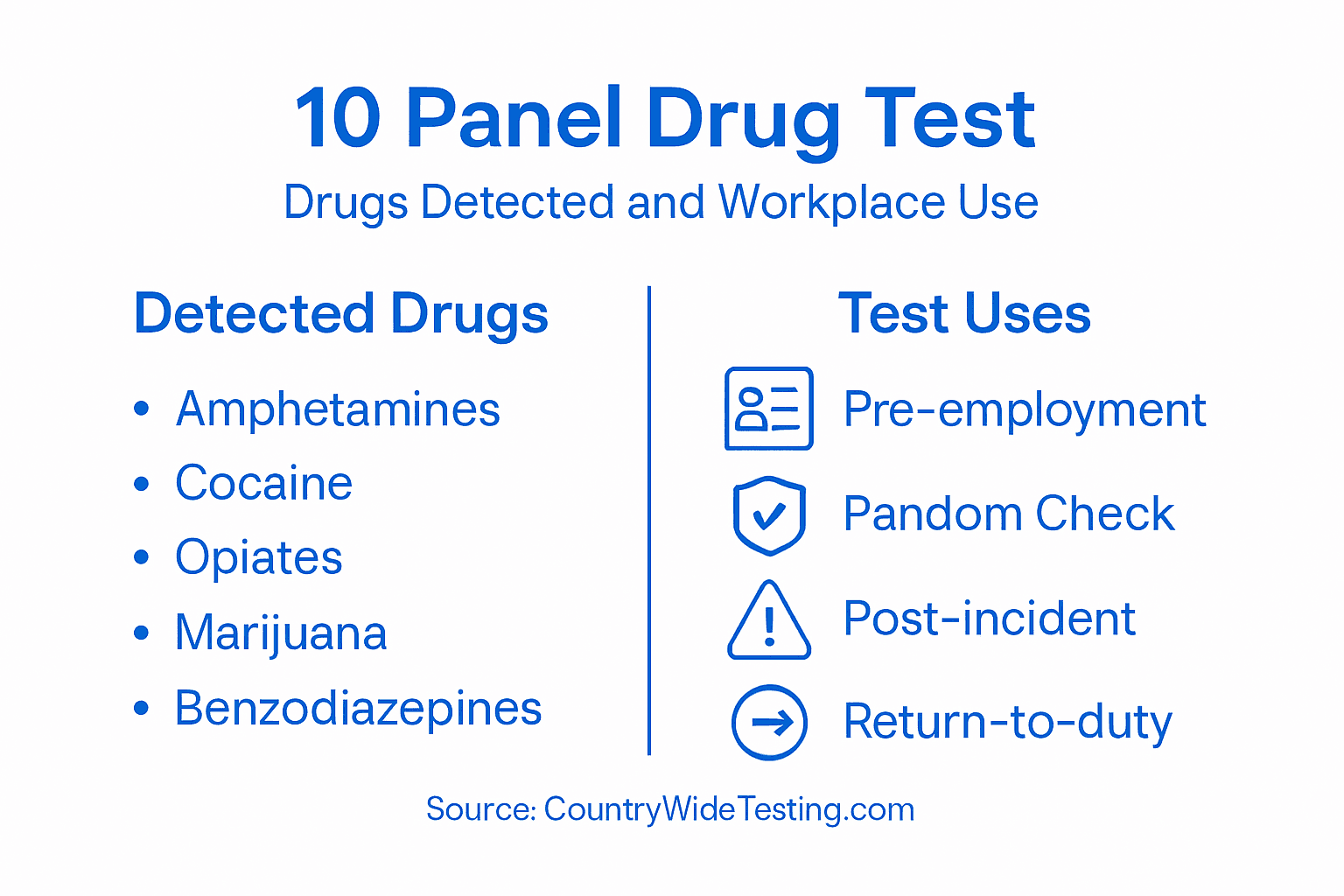
- Pre-employment screening
- Random workplace testing
- Post-accident investigations
- Reasonable suspicion evaluations
- Return-to-work protocols after rehabilitation
Detection windows for these substances vary significantly based on individual metabolic rates, frequency of use, and specific drug characteristics. Some substances might be detectable within hours of consumption, while others can remain traceable for weeks. Understanding these nuanced detection periods helps employers implement fair and consistent drug testing policies.
Pro tip: Work with certified laboratory partners who follow strict chain-of-custody procedures to ensure the most accurate and legally defensible drug screening results.
Drugs Detected in a 10 Panel Test
The 10 panel drug test is a comprehensive screening method that detects multiple substances through advanced urine testing methodologies. This thorough examination provides employers with a detailed overview of potential substance use among employees and job candidates. The test screens for ten specific drug categories, each representing different classes of controlled and illicit substances.
The standard 10 panel drug test typically includes the following substances:
- Amphetamines: Including methamphetamine and prescription stimulants
- Cocaine: Detecting both powder and crack cocaine metabolites
- Marijuana (THC): Screening for cannabis and its psychoactive compounds
- Opiates: Covering heroin, morphine, and codeine
- Phencyclidine (PCP): Detecting the hallucinogenic drug
- Benzodiazepines: Identifying anti-anxiety medications
- Barbiturates: Screening sedative and sleep medications
- Methadone: Detecting synthetic opioid medication
- Methaqualone: Identifying the sedative drug
- Propoxyphene: Screening for pain medication
Each drug category has unique detection windows that depend on factors such as frequency of use, metabolic rate, and individual physiological characteristics. Some substances can be detected within hours of consumption, while others might remain traceable for several weeks. Employers use these comprehensive screenings to maintain workplace safety, comply with regulatory requirements, and ensure a drug-free environment.
Here is a summary of the drug types included in a 10 panel test, along with typical detection ranges and associated risks:
| Drug Class | Common Detection Window | Workplace Risks |
|---|---|---|
| Amphetamines | 2-4 days | Reduced alertness, accidents |
| Cocaine | 2-3 days | Impaired judgment, safety issues |
| Marijuana (THC) | 1-30 days (varies by use) | Coordination problems, slow reaction |
| Opiates | 1-4 days | Drowsiness, overdose risk |
| PCP | 7-14 days | Aggression, hallucinations |
| Benzodiazepines | 3-7 days | Drowsiness, dependency |
| Barbiturates | 2-15 days | Lethargy, impaired function |
| Methadone | 2-14 days | Slow reactions, confusion |
| Methaqualone | 10-15 days | Memory loss, sedation |
| Propoxyphene | 2-4 days | Dizziness, cardiac issues |
Pro tip: Implement a consistent drug testing policy that clearly communicates expectations and provides support for employees struggling with substance abuse.
Laboratory Methods and Processing Standards
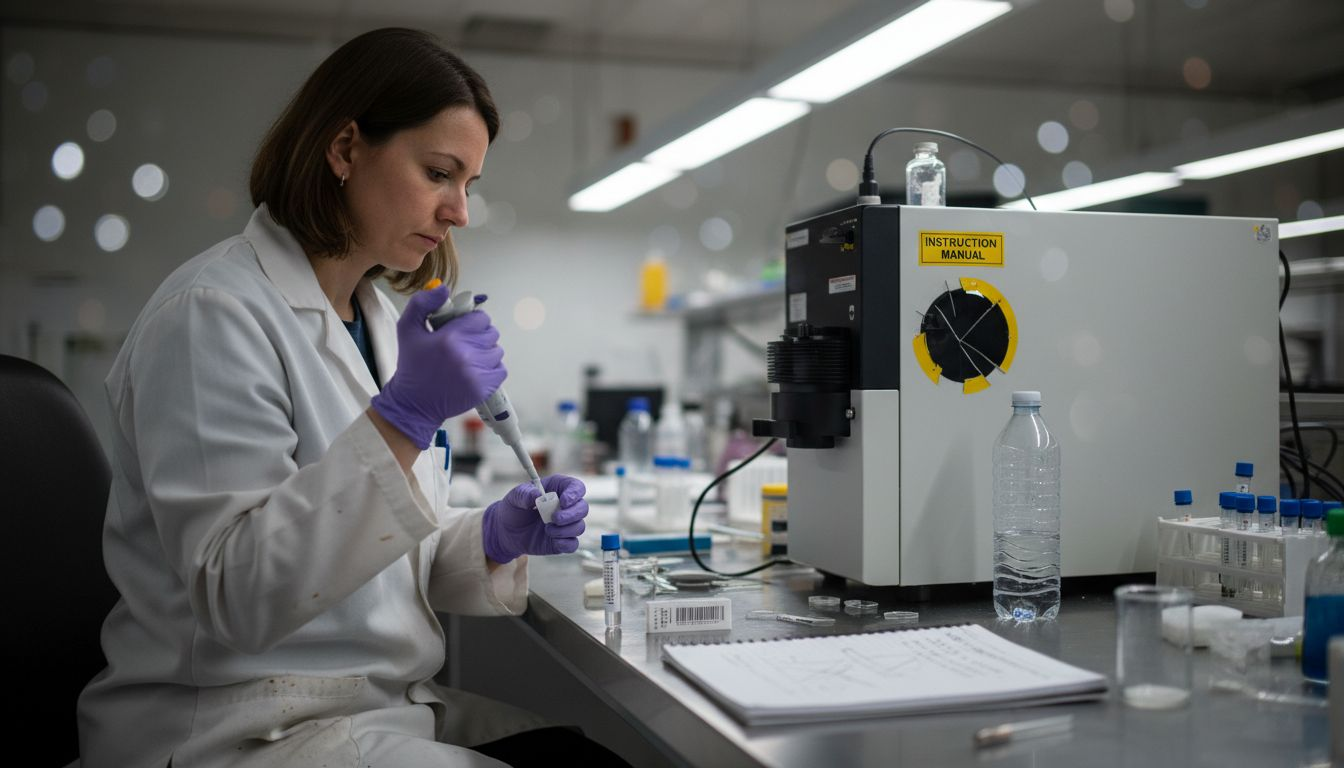
Drug testing laboratories employ sophisticated screening techniques that ensure accurate and reliable results for employers. The testing process involves a comprehensive two-step methodology designed to minimize false positives and provide definitive substance identification.
The first stage of drug testing typically involves an initial screening process:
-
Immunoassay Screening: A rapid qualitative method
- Uses antibody-based detection
- Provides quick preliminary results
- Can identify potential drug presence
-
Confirmatory Testing: A precise identification method
- Utilizes advanced chromatography techniques
- Includes gas chromatography-mass spectrometry (GC-MS)
- Liquid chromatography-mass spectrometry (LC-MS)
- Provides quantitative and definitive substance identification
The confirmatory testing stage is critical because it eliminates potential cross-reactivity issues found in initial screenings. Laboratories follow strict protocols to maintain chain of custody, ensuring the integrity of each sample from collection through analysis. This meticulous process involves documented handoffs, secure storage, and detailed tracking to prevent tampering or contamination.
The table below compares drug testing laboratory methods for workplace screenings:
| Testing Method | Main Advantage | Potential Limitation |
|---|---|---|
| Immunoassay Screening | Fast initial results | Possibility of false positives |
| GC-MS or LC-MS | Highly accurate, specific | More costly and time-consuming |
Pro tip: Request documentation of laboratory accreditation and certification to ensure the highest standards of drug testing accuracy and reliability.
Employment Uses and Compliance Requirements
Employers implement drug-free workplace programs to maintain safety, productivity, and legal compliance across various workplace settings. The 10 panel drug test serves as a critical tool for organizations seeking to establish comprehensive substance use prevention strategies that protect both employee and employer interests.
The primary employment uses of 10 panel drug testing include:
-
Pre-Employment Screening
- Identifying potential substance use before hiring
- Establishing baseline expectations for workplace behavior
- Reducing potential workplace safety risks
-
Ongoing Workplace Testing
- Random testing programs
- Post-accident investigations
- Reasonable suspicion evaluations
- Return-to-work protocols after rehabilitation
Legal compliance requires employers to navigate complex regulatory landscapes. Key considerations include:
- Adherence to federal guidelines
- Respect for employee privacy rights
- Compliance with anti-discrimination laws
- Transparent testing policies
- Consistent application of testing procedures
The Drug-Free Workplace Act mandates specific requirements for federal contractors, compelling organizations to develop comprehensive substance screening protocols. Employers must balance safety concerns with legal protections, ensuring that drug testing practices are fair, consistent, and designed to support employee wellness rather than punish individual workers.
Pro tip: Develop a clear, written drug testing policy that outlines expectations, procedures, and support resources for employees struggling with substance use.
Addressing Risks, Accuracy, and Alternatives
Employers must carefully consider the potential limitations of drug testing to ensure fair and accurate workplace screening practices. Understanding the nuanced risks and alternative methods is crucial for developing comprehensive substance screening strategies that balance employee privacy with workplace safety.
Key risks associated with 10 panel drug testing include:
-
False Positive Concerns
- Cross-reactive substances
- Medication interactions
- Potential for unintended discrimination
-
Detection Window Limitations
- Varies by drug type
- Inconsistent reliability
- Potential for missed recent use
Alternative testing methods offer different advantages and considerations:
-
Oral Fluid Testing
- Shorter detection window
- More difficult to adulterate
- Reflects more recent substance use
-
Hair Follicle Testing
- Longer historical detection
- Less invasive collection
- Cannot detect very recent use
To mitigate risks, employers should implement multi-step verification processes. Confirmatory testing using advanced techniques like mass spectrometry can significantly improve result accuracy. This approach helps reduce false positives and provides more reliable information for workplace decision-making.
Pro tip: Implement a comprehensive testing strategy that combines multiple testing methods and includes clear protocols for result interpretation and employee support.
Protect Your Workplace with Trusted 10 Panel Drug Testing Solutions
Ensuring a safe and compliant workplace starts with reliable 10 panel drug testing that captures substances like amphetamines, cocaine, and opioids as detailed in the article. Facing challenges such as accurate detection, regulatory compliance, and clear communication of testing policies? CountryWideTesting.com is here to help you overcome these hurdles. We partner with licensed laboratories accredited by SAMHSA, ISO, CLIA, and CAP to provide precise, legally defensible results you can trust.
Whether you need urine or mouth swab drug tests for pre-employment screening, random testing, or return-to-work protocols, our wide range of products and lab services are designed to meet your specific needs. Stay ahead of risks like false positives or inconsistent detection windows by choosing comprehensive and certified testing solutions tailored for employers.
Get started today with CountryWideTesting.com and implement robust drug testing programs that protect your employees and your business. Discover more about our drug and alcohol testing services and experience the confidence that comes with partnering with trusted government-approved labs. Take control of your workplace safety now by visiting CountryWideTesting.com.
Frequently Asked Questions
What substances are detected in a 10 panel drug test?
A 10 panel drug test screens for ten specific drug classes, including amphetamines, cocaine, marijuana (THC), opioids, phencyclidine (PCP), benzodiazepines, barbiturates, methadone, propoxyphene, and methaqualone.
How does a 10 panel drug test ensure accuracy in results?
The accuracy of a 10 panel drug test is ensured through a two-step testing process that includes an initial immunoassay screening followed by confirmatory testing using advanced techniques like gas chromatography-mass spectrometry (GC-MS) or liquid chromatography-mass spectrometry (LC-MS).
What are the typical scenarios for using a 10 panel drug test in the workplace?
Employers typically use a 10 panel drug test during pre-employment screening, random workplace testing, post-accident investigations, reasonable suspicion evaluations, and return-to-work protocols after rehabilitation.
What are the potential limitations of a 10 panel drug test?
Potential limitations of a 10 panel drug test include the possibility of false positives due to cross-reactivity, inconsistent detection windows that vary by substance, and the risk of missing recent drug use. Employing confirmatory testing can help mitigate these risks.