
Benefits of Lab Testing: Your Complete Health Guide
TL;DR:
- Lab testing detects silent health problems early and guides effective treatment by analyzing biological samples.
- Certified labs ensure result accuracy, which is essential for reliable health decisions and legal compliance.
Lab testing is the process of analyzing biological samples to generate objective data for health decisions, disease detection, and regulatory compliance. The benefits of lab testing extend far beyond a routine checkup. They include catching silent conditions like prediabetes before symptoms appear, building personal health baselines, guiding treatment decisions, and satisfying workplace safety standards under frameworks like CLIA and ISO 15189. More than 80% of the 96 million Americans with prediabetes have no idea they have it. That single statistic explains why laboratory testing is not optional for anyone serious about their health or compliance obligations.
1. What are the benefits of lab testing for early disease detection?
Lab testing identifies conditions before symptoms appear. That is its single greatest advantage. Diseases like prediabetes, high cholesterol, anemia, and thyroid dysfunction can silently damage the body for years before a person feels anything.
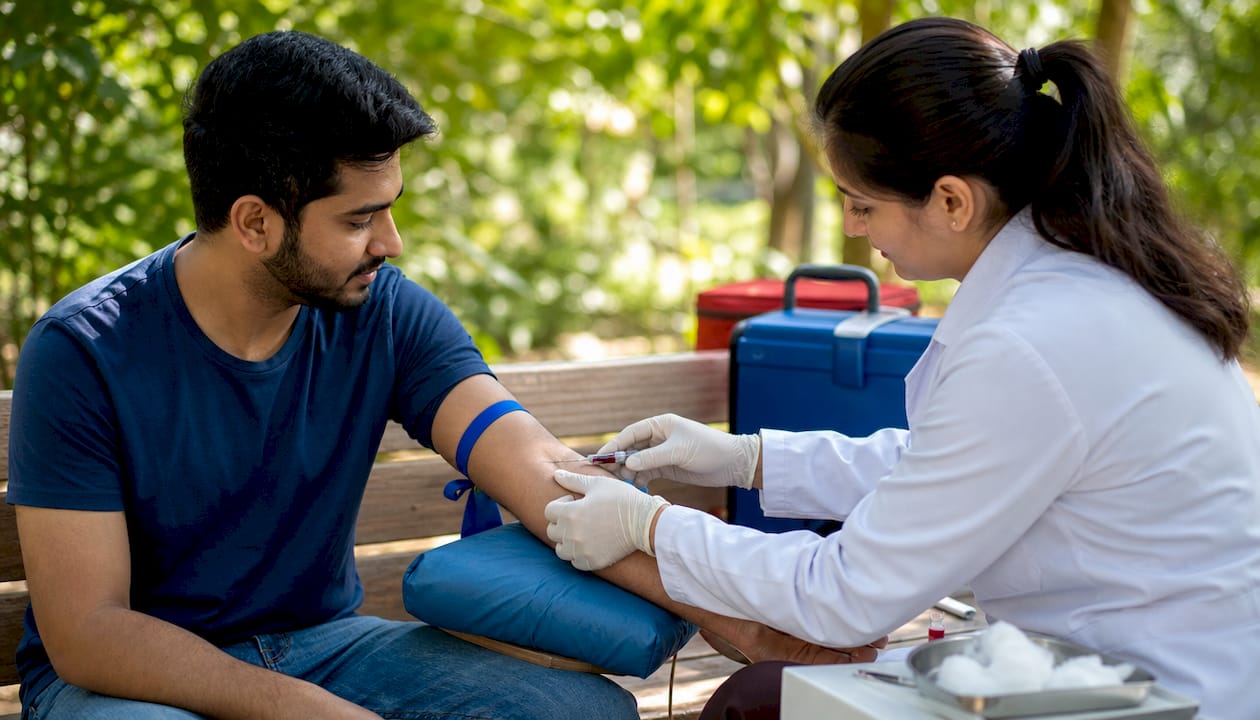
Annual blood work provides a detailed snapshot of internal health, uncovering asymptomatic chronic conditions years before damage occurs. Early detection means earlier, cheaper, and more effective intervention.
The financial case is equally strong. Preventive lab tests often cost under $50, compared to hundreds of thousands of dollars for managing late-stage complications like kidney failure or amputation. Catching prediabetes with a $30 fasting glucose test is categorically different from managing dialysis at $90,000 per year.
Key conditions detectable through routine lab panels before symptoms emerge:
- Prediabetes and type 2 diabetes via fasting glucose and HbA1c tests
- Cardiovascular risk via lipid panels measuring LDL, HDL, and triglycerides
- Anemia via complete blood count (CBC)
- Thyroid dysfunction via TSH and free T4 levels
- Kidney disease via creatinine and eGFR measurements
- Nutritional deficiencies including vitamin D, B12, and iron
Pro Tip: Schedule a comprehensive metabolic panel and CBC every 12 months, even when you feel healthy. Conditions like iron-deficiency anemia and early kidney disease produce no noticeable symptoms until they are well advanced.
2. How personal baselines make lab results more meaningful
Standard reference ranges on lab reports are population averages. They tell you where most people fall, not where you specifically should be. Establishing a personal baseline through routine testing is more valuable for early detection than relying on those population-wide ranges alone.
A personal baseline is built by tracking the same biomarkers over time. When your TSH has consistently measured 1.2 mIU/L for three years and suddenly reads 3.8 mIU/L, that shift is clinically significant even though 3.8 falls within the “normal” range. A one-time test would miss it entirely.
| Biomarker | Population reference range | Why your personal baseline matters |
|---|---|---|
| TSH (thyroid) | 0.4–4.0 mIU/L | A shift from your personal norm signals dysfunction before range breach |
| Fasting glucose | 70–99 mg/dL | Trending upward from 82 to 96 over 3 years predicts prediabetes risk |
| Hemoglobin | 12–17 g/dL | A drop from your personal high signals early anemia |
| LDL cholesterol | Below 100 mg/dL (optimal) | Rising trend matters even when still within range |
Chronic condition management depends on this longitudinal view. People managing hypothyroidism, type 2 diabetes, or autoimmune conditions need trend data, not isolated snapshots. Repeated testing over months and years gives clinicians the data they need to make fine adjustments before a condition worsens.
3. How lab results guide treatment decisions and track efficacy
Lab results are the primary tool clinicians use to choose, adjust, and validate treatments. Without objective data, treatment becomes guesswork. With it, every decision has a measurable basis.
Consider thyroid management. A patient prescribed levothyroxine needs TSH retesting every 6–8 weeks after a dose change to confirm the medication is working. Without that follow-up test, the clinician has no way to know whether the dose is too high, too low, or correct. The same logic applies to cholesterol-lowering statins, anticoagulants like warfarin, and antibiotic courses for bacterial infections.
Lab results also prevent unnecessary treatment. A throat culture that confirms a viral rather than bacterial infection eliminates the need for antibiotics. That single test protects the patient from side effects and reduces antibiotic resistance at the population level.
Key treatment decisions guided directly by lab results:
- Medication dosing: Warfarin, lithium, and immunosuppressants require regular blood level monitoring
- Infection type confirmation: Culture and sensitivity tests identify the exact pathogen and which antibiotic kills it
- Cancer monitoring: Tumor markers like PSA and CA-125 track treatment response over time
- Chronic disease adjustment: HbA1c every 3 months guides insulin and medication changes in diabetes management
Pro Tip: Bring a printed copy of your last three lab reports to every specialist appointment. Clinicians make better decisions when they can see trends, not just the most recent result.
4. Point-of-care vs. central lab testing: understanding the tradeoffs
Point-of-care (POC) testing brings analysis directly to the patient, whether in an emergency room, a clinic, or a workplace. Central laboratory testing sends samples to a certified facility for processing. Both serve distinct purposes, and choosing between them depends on the situation.
POC testing reduces blood sampling wait times by 19 minutes and length-of-stay by 55–82 minutes compared to central lab workflows. That speed advantage is critical in emergency settings where a troponin result for a suspected heart attack cannot wait two hours.
| Factor | Point-of-care testing | Central laboratory testing |
|---|---|---|
| Turnaround time | Minutes | Hours |
| Cost per test | Higher | Lower (high-volume efficiency) |
| Test menu | Limited | Extensive |
| Analytical control | Variable | Superior, standardized |
| Best use case | Emergencies, remote settings | Complex panels, high-volume screening |
Central labs offer superior analytical control and cost-effectiveness for high-volume complex testing. For routine annual panels, workplace drug screening, or multi-biomarker assessments, a certified central lab is the right choice. POC testing fills the gap when speed outweighs cost and menu breadth.
At-home lab testing adds a third option. Patients collect samples at home and mail them to an accredited lab for processing. At-home testing requires strict clinical protocols and partnerships with accredited laboratories to deliver accuracy equivalent to hospital labs. The convenience is real, but the accreditation behind the processing lab is what makes the result trustworthy.
Pro Tip: When ordering an at-home test, verify that the processing laboratory holds CLIA certification. Without it, the result has no regulatory standing and may not be accepted by a clinician.
5. Why lab accreditation standards protect you
Accreditation is the mechanism that makes a lab result trustworthy. Without it, a number on a report is just a number. Standards like CLIA (Clinical Laboratory Improvement Amendments) and ISO 15189 define the quality controls, equipment calibration, and staff qualifications that certified labs must maintain.
Lab tests provide objective quantitative data essential for accurate telemedicine and AI-driven care, backed by strict quality standards such as CLIA and ISO 15189. That matters because digital health tools, wearables, and remote monitoring platforms all depend on lab data as their ground truth. A smartwatch can estimate heart rate variability. It cannot measure HbA1c.
Key accreditation bodies and what they govern:
- CLIA: Federal certification for all US labs performing clinical testing on human specimens
- ISO 15189: International standard for medical laboratory quality and competence
- CAP (College of American Pathologists): Voluntary accreditation exceeding CLIA requirements
- SAMHSA: Federal certification for workplace drug testing laboratories
For workplace drug testing, certified labs play a critical role in maintaining safety and legal defensibility. A non-certified lab result cannot withstand legal challenge in a workplace dispute. Employers who rely on SAMHSA-certified labs protect both their workforce and their legal standing. You can learn more about how CLIA accreditation works and why it matters for result reliability.
6. The role of lab testing in workplace safety and compliance
Workplace drug and alcohol testing is one of the most regulated applications of laboratory science. Federal agencies including the Department of Transportation (DOT) and the Substance Abuse and Mental Health Services Administration (SAMHSA) mandate specific testing protocols for safety-sensitive positions.
Lab-based urine drug testing remains the gold standard for federally mandated programs. It detects a broader range of substances, provides a longer detection window than oral fluid tests, and produces results that are legally defensible in court. Employers in transportation, healthcare, and defense contracting cannot substitute rapid tests for lab-confirmed results in federally regulated programs.
The advantages of lab testing in compliance contexts go beyond detection. Chain-of-custody documentation, split-specimen protocols, and medical review officer (MRO) oversight all depend on certified laboratory infrastructure. These safeguards protect employees from false positives and protect employers from liability. Compliant lab testing is not just a best practice. It is a legal requirement in many industries.
Key Takeaways
Lab testing is the most reliable method for detecting silent health risks, guiding treatment decisions, and satisfying regulatory compliance requirements across healthcare and workplace settings.
| Point | Details |
|---|---|
| Early detection saves money | Preventive lab tests under $50 catch conditions that cost hundreds of thousands to treat late-stage. |
| Personal baselines outperform averages | Tracking your own biomarker trends over time reveals changes that population reference ranges miss. |
| Accreditation determines result validity | Only CLIA and SAMHSA-certified labs produce results accepted by clinicians and courts. |
| POC testing trades cost for speed | Point-of-care tests cut wait times significantly but cost more per unit than central lab processing. |
| Workplace testing requires certified labs | Federally mandated drug testing programs require SAMHSA-certified lab confirmation, not rapid tests alone. |
Why I think most people underestimate lab testing
After years of watching how health decisions get made, I keep coming back to the same observation. People treat lab testing as something you do when something is already wrong. That framing is exactly backward.
The most valuable lab result is the one that shows nothing alarming, because it establishes your baseline. Three years later, when a number shifts, you have something to compare it to. Without that history, a clinician is working blind. Routine lab testing shifts healthcare from reactive to proactive by detecting subtle internal changes before symptoms appear. That is not a marketing claim. It is how the data works.
The anxiety concern is real but overblown. Yes, some people spiral after seeing a borderline result. The solution is not to test less. It is to work with a clinician who can contextualize results within your personal history. A single elevated fasting glucose reading is not a diabetes diagnosis. It is a data point that needs a trend to mean anything.
The digital health world is generating enormous enthusiasm around wearables and AI-driven diagnostics. I share some of that enthusiasm. But lab testing remains the backbone of clinical data, providing the trust and measurability that digital sensors alone cannot deliver. Every credible digital health platform eventually routes back to lab confirmation. That is not a limitation of technology. It is a feature of biology.
— Alan
Countrywidetesting: accredited lab testing for individuals and employers
Countrywidetesting connects individuals and employers with accredited laboratory testing services backed by SAMHSA, CLIA, CAP, and ISO-certified facilities. Whether you need a comprehensive health panel, a federally compliant workplace drug screen, or a convenient at-home urine test, the platform provides verified options without the guesswork.
The lab testing services available through Countrywidetesting cover urine drug panels, multi-substance screens, and specialty health testing, all processed by certified labs with full chain-of-custody documentation. For employers managing DOT compliance or safety-sensitive hiring, that certification is not optional. For individuals who want results they can actually trust and share with a clinician, it is equally non-negotiable. Explore the full catalog at Countrywidetesting to find the right test for your situation.
FAQ
What does “lab testing” actually measure?
Lab testing analyzes biological samples such as blood, urine, or saliva to measure biomarkers including glucose, cholesterol, hormones, and drug metabolites. Results provide objective data that clinicians and employers use to make health and compliance decisions.
How often should I get routine lab tests?
Annual comprehensive blood panels are the standard recommendation for healthy adults, covering metabolic function, lipid levels, and blood cell counts. People managing chronic conditions like diabetes or thyroid disease typically need testing every 3–6 months.
Are at-home lab tests as accurate as hospital tests?
At-home lab tests processed by CLIA-accredited laboratories deliver accuracy equivalent to hospital labs. The key is confirming that the processing lab holds proper accreditation, not just that the collection kit is convenient.
Why do employers require lab-confirmed drug tests?
Federally mandated programs under DOT and SAMHSA require lab-confirmed urine testing because rapid tests alone are not legally defensible. Certified labs provide chain-of-custody documentation and MRO review, which protect both employers and employees.
What is the difference between CLIA and SAMHSA certification?
CLIA certifies laboratories to perform clinical testing on human specimens across all medical disciplines. SAMHSA certification specifically qualifies labs to conduct federally mandated workplace drug testing, with additional chain-of-custody and quality requirements.