
Athlete Drug Test Eligibility: Rules Every Competitor Must Know
Who is subject to athlete drug test eligibility requirements?
Athlete drug test eligibility is determined by the anti-doping jurisdiction under which you compete. If you are a member or license holder of a National Governing Body, an International Federation, or you compete in events sanctioned by those bodies, you are subject to testing. Three organizations set the rules for most U.S. athletes: the U.S. Anti-Doping Agency (USADA), the NCAA, and the World Anti-Doping Agency (WADA).
Eligibility criteria vary by competition level, governing body, and athlete classification. Here is a quick breakdown:
- Olympic and Paralympic athletes fall under USADA jurisdiction and can be tested year-round with no off-season.
- NCAA Division I and II student-athletes are subject to year-round testing for steroids, peptide hormones, and masking agents, plus additional testing during championships.
- NCAA Division III institutions may opt into the testing program, but participation is not mandatory.
- High school athletes may be tested depending on state law and district policy, since testing is legally permitted but not uniformly required.
- International-level athletes competing under WADA-affiliated federations are subject to doping control anytime or anywhere at the national or international level.
- Suspended athletes remain subject to all testing pool requirements during their period of ineligibility.
The core principle is straightforward: if you compete under any of these jurisdictions, you are eligible for testing regardless of season or location.
What does the drug testing process actually look like?
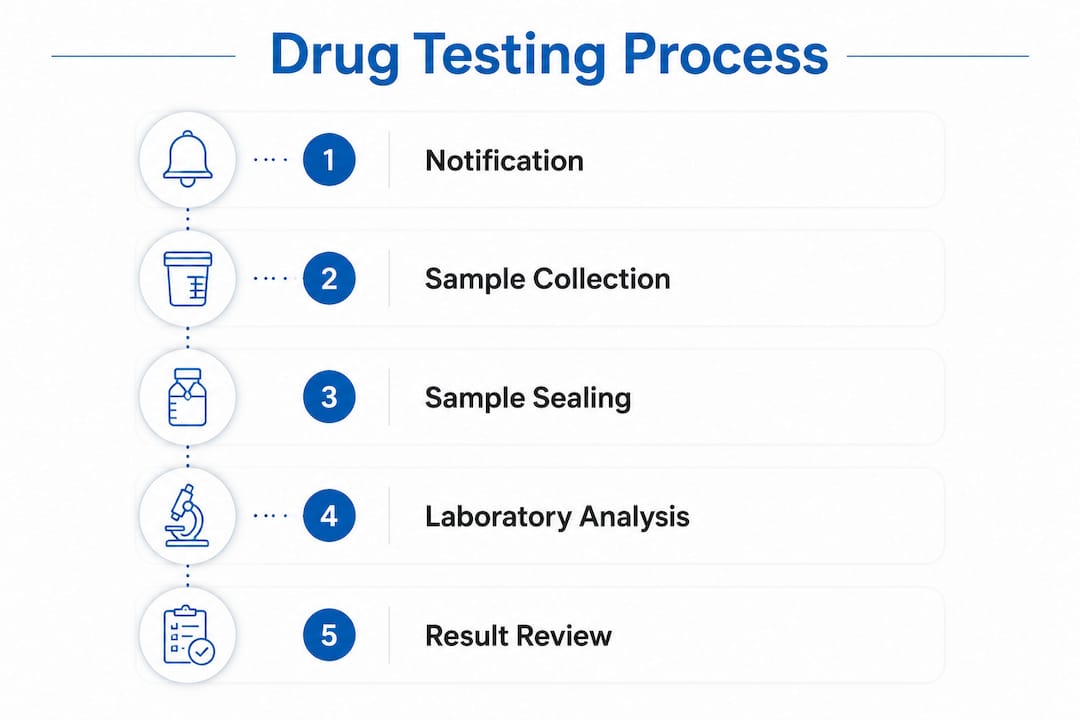
The testing process follows a structured sequence designed to protect sample integrity and athlete rights. Understanding each step removes the uncertainty that can make testing feel intimidating.
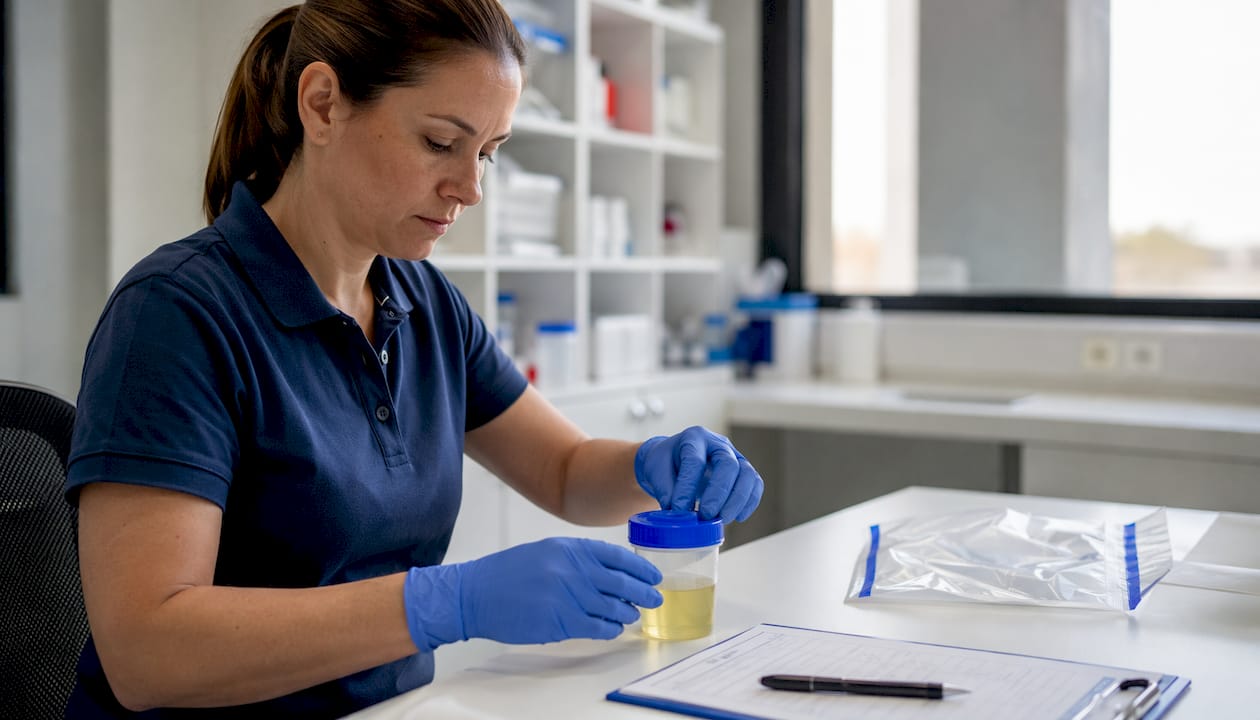
When you are selected, a Doping Control Officer (DCO) or chaperone notifies you and informs you under which organization’s authority the test is being conducted. You must report to the doping control station promptly, though exceptions exist for medal ceremonies and similar obligations. From that point, the process moves through sample collection, sealing, and shipment to an accredited laboratory.
Sample types and collection methods include:
- Urine samples, collected under direct observation, with the DCO measuring specific gravity to confirm sample validity.
- Blood samples, drawn by a trained professional, used to detect substances like human growth hormone (hGH) and erythropoietin (EPO).
- Dried Blood Spot (DBS) testing, a newer method that uses a small finger-prick sample and is increasingly used for out-of-competition testing.
- A and B vial splitting: every sample is divided into two sealed vials. The A vial is analyzed first; the B vial is preserved so the athlete can request independent confirmation if the A sample returns an adverse finding.
Laboratory analysis goes well beyond basic screening. USADA employs advanced techniques including Carbon Isotope Ratio (CIR) testing and Isotope Ratio Mass Spectrometry (IRMS) to detect synthetic substances that mimic natural hormones. Testing occurs both in-competition (during or immediately after an event) and out-of-competition, with the latter conducted with little or no advance notice to maximize deterrence.
For a detailed breakdown of the types of athlete tests used across different sports and governing bodies, Countrywidetesting covers each method clearly.
What are your rights and responsibilities as a tested athlete?
Your obligations as an eligible athlete extend well beyond showing up on test day. The most demanding ongoing requirement is whereabouts reporting, and failing to meet it carries consequences as serious as a positive test.
Athletes in elite testing pools must submit quarterly whereabouts filings that specify where they will be living, training, and competing. Each filing must also designate a specific 60-minute daily time slot at a fixed location where testers can find you without advance notice. Missing that window can be declared a Missed Test. Three filing failures or missed tests within a 12-month period constitute an anti-doping rule violation.
Your rights during the process include:
- Notification: you must be told which organization is conducting the test and why you were selected.
- Representation: you may request a representative or witness be present during sample collection.
- B sample analysis: if your A sample returns an adverse finding, you have the right to have the B sample tested independently.
- Confidentiality: test results are shared only with authorized personnel until a formal sanction is issued.
- Appeals: you may challenge a finding through the Court of Arbitration for Sport (CAS) or applicable national bodies.
Pro Tip: Use USADA’s online athlete portal to manage your whereabouts filings and set calendar reminders for quarterly deadlines. A missed filing is entirely preventable with a simple system, and the penalty for missing one is the same as failing a test.
How do USADA, NCAA, and WADA govern drug testing in the U.S.?
These three organizations operate distinct but overlapping frameworks, and knowing which one governs you is the first step toward full compliance.
USADA serves as the national anti-doping authority for Olympic, Paralympic, Pan American, and Parapan American sport in the United States. It conducts testing under the World Anti-Doping Code and maintains jurisdiction over athletes 365 days a year. USADA allocates tests based on risk profiling, factoring in prior violations, biological passport data, and performance history to direct resources where they matter most.
NCAA governs collegiate sport across all three divisions. Its drug-testing program targets performance-enhancing drugs year-round and adds stimulant and recreational drug testing during championship events. The NCAA drug testing program also emphasizes education alongside enforcement, recognizing that many violations are unintentional.
WADA sets the global standard. It publishes the Prohibited List, which all compliant organizations must adopt, and coordinates policy across more than 600 sports organizations worldwide. National Anti-Doping Organizations like USADA operate under WADA’s framework.
“The presence of a prohibited substance in an athlete’s sample constitutes a violation regardless of intent. Athletes are responsible for every substance found in their bodies.” — World Anti-Doping Code, strict liability principle
Therapeutic Use Exemptions (TUEs) are the recognized mechanism for athletes who need a prohibited substance for a legitimate medical condition. A TUE must be applied for in advance through the relevant anti-doping organization, and approval is not guaranteed. Carrying a valid TUE prevents a positive test result from becoming a rule violation, provided the substance and dosage match the exemption exactly.
Sanctions for violations range from disqualification of results to multi-year bans, financial penalties, and public disclosure. Athletes serving suspensions must continue submitting whereabouts information and remain available for testing throughout their ineligibility period.
For a deeper look at NCAA compliance protocols and banned substance categories by division, Countrywidetesting has a dedicated resource.
Practical steps to stay compliant with drug testing requirements
Compliance is not passive. Athletes and administrators who treat anti-doping as an active responsibility avoid the violations that derail careers.
- Verify every medication before taking it. The NCAA’s AXIS portal lets student-athletes check whether a specific product contains banned substances. USADA’s Global Drug Reference Online (Global DRO) serves the same function for Olympic-level athletes.
- Submit whereabouts filings on time, every quarter. Build the deadline into your training calendar the same way you schedule competitions.
- Understand the prohibited list for your governing body. WADA updates its list annually, effective January 1 each year. Substances move on and off the list, so checking once is not enough.
- Apply for a TUE before you need it, not after a positive test. Retroactive TUEs are granted only in emergency situations and are not a reliable fallback.
- Educate support staff. Coaches, trainers, and medical personnel who recommend supplements or medications share responsibility for athlete compliance. A supplement that is legal in a pharmacy may still contain a prohibited substance.
- Know your testing pool status. Ask your national governing body or athletic department whether you are in a Registered Testing Pool and what your specific obligations are.
Countrywidetesting offers lab testing services through SAMHSA-certified and CAP-accredited laboratories, giving athletes and sports organizations a reliable option for pre-competition screening and compliance monitoring. Getting ahead of a potential issue with a confirmed lab result is far better than waiting for a surprise.
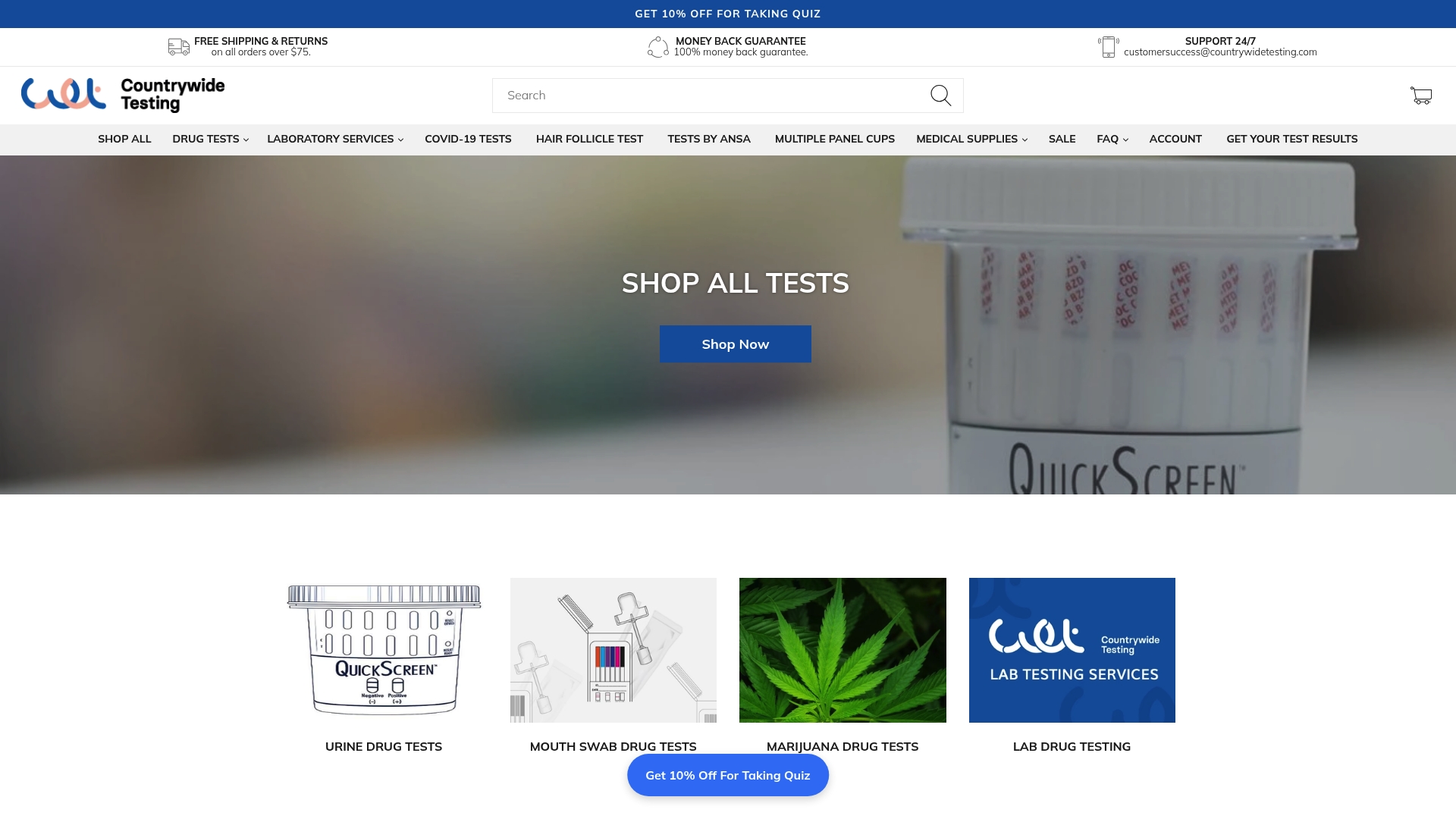
If you want to run a preliminary check before a major competition, the at-home steroid urine test kit from Countrywidetesting provides a fast, private screening option you can use on your own schedule.
Key Takeaways
Athlete drug test eligibility is governed by USADA, NCAA, and WADA, and compliance requires year-round attention to whereabouts, medications, and testing obligations.
| Point | Details |
|---|---|
| Eligibility is jurisdiction-based | You are subject to testing if you compete under USADA, NCAA, or a WADA-affiliated federation. |
| Testing runs year-round | USADA tests athletes throughout the year without an off-season; NCAA Divisions I and II conduct year-round testing with additional focused periods during championships. |
| Whereabouts filing is mandatory | Elite athletes must submit quarterly filings and designate a daily 60-minute slot for unannounced testing. |
| Strict liability applies | The presence of a prohibited substance in your sample is a violation regardless of how it got there. |
| TUEs protect medical needs | A valid Therapeutic Use Exemption prevents a prohibited substance from triggering a rule violation when medically necessary. |