
Adulterant Screening Overview: Methods and Best Practices
TL;DR:
- Adulterant screening detects substances added intentionally to falsify test results in drug testing and food safety. It employs layered biochemical, chromatographic, spectroscopic, DNA, and mass spectrometry methods to identify adulterants accurately. Advances like AI and portable devices are improving detection speed and effectiveness in combating evolving fraud.
Adulterant screening is defined as the systematic detection of substances intentionally added to a specimen to falsify or compromise test results. This process is central to drug testing integrity and food safety enforcement. Without it, a urine sample spiked with bleach or a food product diluted with cheaper substitutes passes undetected. Regulatory bodies like the FDA and standards organizations such as SAMHSA, CAP, and CLIA have built adulterant detection into compliance frameworks precisely because the consequences of missing it range from failed workplace safety programs to serious public health crises. This overview of adulterant screening covers the core methods, the regulatory stakes, and the best practices professionals use to stay ahead of increasingly sophisticated fraud.
What is adulterant screening and how does it work?
Adulterant screening is the first line of defense against sample manipulation. In drug testing, it checks whether a urine specimen has been altered through dilution, substitution, or the addition of masking agents like oxidants, acids, or surfactants. In food safety, it identifies cheaper or harmful substances swapped in for authentic ingredients.
The process typically runs in two stages. A rapid initial screen flags specimens that fall outside accepted parameters. A confirmatory test then identifies the specific adulterant and its concentration. This two-stage structure mirrors the approach used in certified drug screening labs that meet CAP and CLIA standards.
Adulteration is not the same as contamination. Contamination is accidental; adulteration is deliberate fraud for economic gain or to deceive a test. That distinction matters because it changes the investigative response entirely. A contaminated batch triggers a process review. An adulterated one triggers enforcement.
What are the main adulteration detection methods?
Detection methods fall into five broad categories, each suited to different specimen types and fraud scenarios.
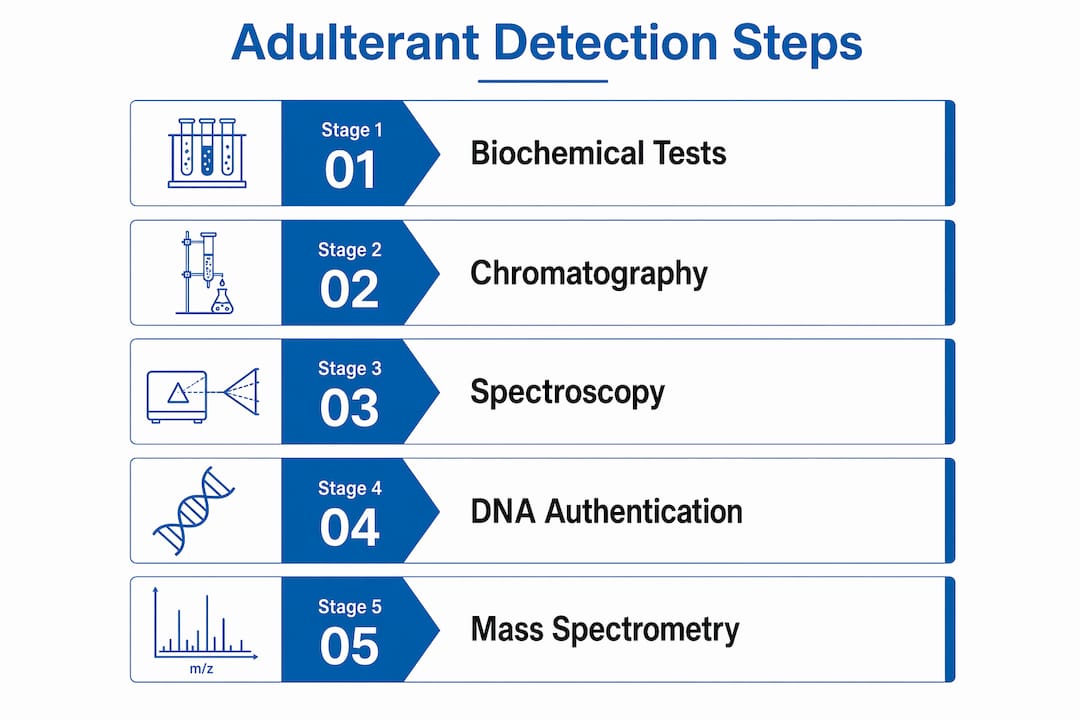
Biochemical tests for urine specimens
Biochemical screening checks pH, creatinine concentration, specific gravity, and the presence of oxidants like bleach or nitrites. These parameters reveal dilution, substitution, and chemical masking in minutes. Most SAMHSA-compliant labs run these checks on every urine specimen before any drug panel analysis begins.
Chromatographic techniques
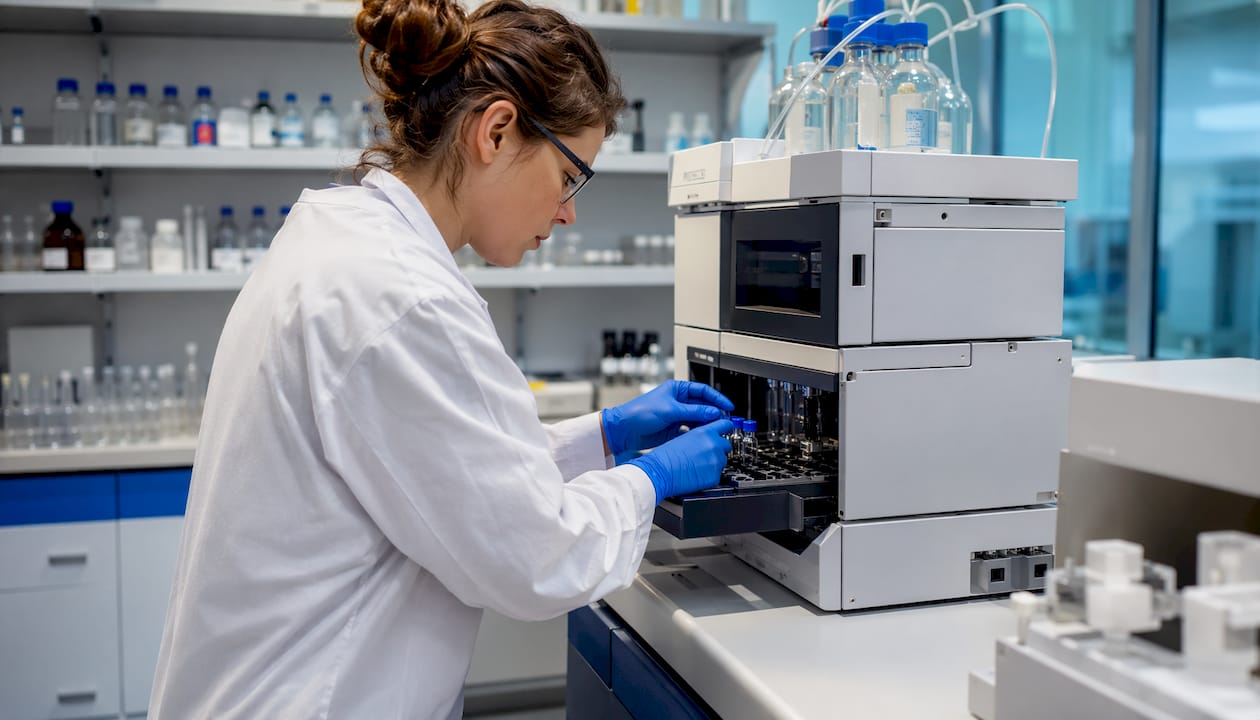
High-performance liquid chromatography (HPLC) and ultra-high-performance liquid chromatography (UHPLC) separate complex mixtures into individual components for precise identification. HPLC can detect goat milk adulteration at concentrations as low as 1%. That level of sensitivity makes chromatography the gold standard for food authentication and pharmaceutical quality control.
Spectroscopic methods
Mid-infrared (IR), near-infrared (NIR), and Raman spectroscopy combined with chemometric data analysis form a mature, core screening approach for rapid, on-site adulterant classification. These methods require minimal sample preparation and can quantify adulteration levels without destroying the specimen. NMR spectroscopy adds another layer by revealing molecular structure, which is particularly useful for detecting synthetic adulterants in herbal or botanical products.
DNA-based authentication
DNA testing identifies species substitution at the molecular level. It is the definitive method for catching mislabeled seafood, meat, or botanical ingredients. If a product claims to contain one species but contains another, DNA barcoding exposes the fraud regardless of how similar the two look or taste.
Ambient ionization mass spectrometry
Ambient ionization mass spectrometry enables high-throughput screening of pharmaceutical adulterants in herbal products with near-zero sample preparation. That speed advantage makes it practical for point-of-inspection testing where turnaround time matters as much as accuracy.
Pro Tip: No single method catches every adulterant. Build a tiered workflow: biochemical screens first, then chromatographic or spectroscopic confirmation, then DNA or mass spectrometry for complex cases.
| Method | Best Application | Speed |
|---|---|---|
| Biochemical (pH, creatinine) | Urine specimen validity | Minutes |
| HPLC/UHPLC | Food and pharmaceutical authentication | Hours |
| IR/NIR/Raman spectroscopy | On-site food screening | Minutes |
| DNA barcoding | Species substitution detection | Hours to days |
| Ambient ionization MS | Pharmaceutical adulterant screening | Minutes |
Why is detecting sophisticated adulterants so difficult?
The core challenge is that fraudsters adapt faster than regulations update. As detection methods improve for one adulterant, a new one takes its place. Melamine was replaced by urea and amino acids as milk adulterants precisely because standard tests catch melamine reliably now. Urea and amino acids are harder to flag because they occur naturally in milk at low levels.
“Traditional analytical methods often fail to catch sophisticated adulterants as fraudsters evolve their techniques. The gap between detection capability and fraud innovation is the most dangerous space in food and drug safety.”
This gap creates real problems for laboratories operating under cost and time constraints. Running a full multi-technique panel on every sample is expensive. Labs must balance thoroughness with practicality, which means some adulterants slip through single-method workflows.
Three additional barriers slow progress:
- Standardization gaps. No universal, publicly available reference library exists for all known adulterants. Labs often build proprietary databases, which limits cross-industry knowledge sharing.
- Model generalizability. Spectroscopic models trained on one product type often fail when applied to a different brand or regional variant of the same product.
- Regulatory lag. Enforcement frameworks take time to update after new adulterants emerge, leaving a window where fraud goes unpunished.
The adulteration compliance landscape in drug testing faces the same adaptive pressure. Specimen validity testing must keep pace with new masking agents as they appear on the market.
Why does the regulatory and economic importance of adulterant screening matter?
The financial scale of adulteration fraud is staggering. Economically motivated adulteration costs the global food industry an estimated $10–$40 billion annually. That figure does not include the downstream costs of product recalls, legal liability, or damage to brand reputation.
The FDA defines economically motivated adulteration (EMA) as the fraudulent, intentional substitution or addition of a substance to a product for economic gain. The agency responds through a structured enforcement process:
- Surveillance sampling. The FDA collects and tests product samples from import streams, retail channels, and manufacturing facilities.
- Complaint monitoring. Consumer and industry complaints trigger targeted investigations.
- Scientific literature review. Published research on emerging adulterants informs where the FDA focuses testing resources.
- International collaboration. The FDA works with federal and international agencies to share data and coordinate enforcement across borders.
- Import alerts. When violations are confirmed, the FDA issues import alerts that block shipments from non-compliant suppliers.
A concrete example: the FDA found that 16% of imported palm oil samples contained illegal Sudan dyes during a 2016–2017 surveillance program. That finding triggered import alerts and supplier enforcement actions that reshaped the palm oil supply chain.
For employers and HR professionals, the stakes in drug testing are equally direct. A tampered specimen that passes as clean can put a safety-sensitive worker back on the job. Substance screening programs that include specimen validity testing close that gap.
What are the best practices for implementing adulterant screening?
Effective adulterant screening programs share four characteristics: layered detection, documented chain of custody, regular method updates, and integration of emerging technology.
Layered detection means running biochemical validity checks before any drug panel, then escalating to confirmatory methods when a screen flags a specimen. This catches both crude adulterants like bleach and sophisticated ones like synthetic oxidants.
Chain of custody documentation prevents specimen tampering between collection and analysis. Every transfer, storage condition, and handling step must be recorded. Gaps in chain of custody invalidate results regardless of how good the detection method is.
Regular method updates address the adaptive fraud problem directly. Labs should review their adulterant panels at least annually against current scientific literature and FDA enforcement data.
AI and machine learning integration is the most significant emerging trend. AI combined with IR, NMR, and Raman spectroscopy enhances real-time predictive authenticity verification. These systems recognize patterns across thousands of samples faster than any human analyst and flag anomalies that fall outside normal variation.
Pro Tip: Portable NIR and Raman devices now bring on-site screening to field inspections and point-of-collection drug testing. If your program relies solely on lab-based testing, you are missing a fast, cost-effective first-pass filter.
Portable testing advances are particularly relevant for food supply chain inspections, where products move quickly and waiting days for lab results creates enforcement gaps. Point-of-care devices that deliver results in minutes are closing that window.
Key Takeaways
Adulterant screening is the systematic process of detecting intentional sample manipulation, and no single method catches every adulterant across drug testing and food safety contexts.
| Point | Details |
|---|---|
| Two-stage screening is standard | Run biochemical validity checks first, then confirm with chromatographic or spectroscopic methods. |
| Fraudsters adapt continuously | As melamine detection improved, urea and amino acids emerged as harder-to-detect replacements. |
| Economic stakes are massive | Economically motivated adulteration costs the global food industry $10–$40 billion annually. |
| AI amplifies detection accuracy | Fusing AI with IR, NMR, and Raman spectroscopy enables real-time predictive verification. |
| Regulatory compliance requires multi-method programs | FDA enforcement, SAMHSA standards, and CAP certification all assume layered detection workflows. |
What I’ve learned from watching adulterant screening evolve
The part that surprises most professionals is how fast the fraud side moves. Labs spend years validating a new detection method, and by the time it reaches routine use, the adulterants it was designed to catch have already been replaced by something harder to find. I’ve seen this cycle repeat in both food safety and drug testing contexts, and the lesson is always the same: a static screening program is a losing program.
What actually works is treating adulterant screening as a living system rather than a fixed protocol. That means reviewing your method panel every year, not every five years. It means building relationships with regulatory bodies and reading FDA enforcement updates as they come out, not after a crisis forces you to. The FDA’s multi-agency collaboration model is worth studying because it shows how information sharing across organizations catches fraud that no single lab or agency could detect alone.
The AI and portable device developments genuinely excite me, not because they replace laboratory rigor but because they compress the time between suspicion and confirmation. A field inspector with a portable Raman device who flags a shipment in minutes, rather than waiting three days for lab results, changes the economics of fraud detection entirely. That speed advantage belongs to the enforcement side now, not the fraudsters.
My recommendation for any professional building or auditing a screening program: start with your chain of custody documentation before you touch your detection methods. The most sophisticated analytical workflow in the world fails if a specimen can be swapped between collection and analysis.
— Alan
Reliable adulterant screening starts with the right lab partner
Adulterant screening is only as good as the laboratory and testing infrastructure behind it. Countrywidetesting connects individuals and employers with certified labs that meet SAMHSA, CAP, CLIA, and ISO standards, so every specimen goes through a validated, multi-step validity and detection workflow.
Countrywidetesting’s lab drug testing services include specimen validity testing that screens for pH irregularities, creatinine levels, oxidants, and other adulterant markers before any drug panel runs. For employers who need a complete program, the 12-panel drug test cup includes built-in adulterant checks for point-of-collection screening. Certified lab confirmation is available for any specimen that requires it.
FAQ
What is adulterant screening in drug testing?
Adulterant screening is the process of checking a urine specimen for substances added intentionally to mask or falsify drug test results. It measures parameters like pH, creatinine, specific gravity, and oxidant presence before any drug panel analysis runs.
How does adulteration differ from contamination?
Adulteration is deliberate fraud intended to deceive a test or gain economic advantage. Contamination is accidental and results from environmental or process factors, not intentional action.
What detection methods are most reliable for adulterant screening?
No single method is universally reliable. HPLC and mass spectrometry offer the highest sensitivity for chemical identification, while IR and Raman spectroscopy provide rapid on-site screening. Effective programs combine multiple methods in a tiered workflow.
Why is economically motivated adulteration such a large problem?
Economically motivated adulteration costs the global food industry an estimated $10–$40 billion annually. The financial incentive for fraud is high, and detection gaps in single-method screening programs allow sophisticated adulterants to go undetected.
How is AI changing adulterant detection?
AI combined with spectroscopic methods like IR, NMR, and Raman enables real-time predictive verification by recognizing patterns across large datasets. This approach catches subtle adulterations that fall outside the range of traditional threshold-based screening.