
HIV Home Test Window: When Results Are Reliable
Most at-home HIV self-tests are antibody tests that can detect infection 23–90 days after exposure, according to the CDC. If your possible exposure was recent, that window period matters a great deal. The FDA-cleared OraQuick In-Home HIV Test is the most widely available over-the-counter oral-fluid self-test in the United States, and like most antibody-based kits, it requires up to 90 days post-exposure for a negative result to be fully reliable. Here is what you need to know right now:
- If exposure was within the last 72 hours: Contact a doctor or clinic immediately to discuss post-exposure prophylaxis (PEP). A home test will not yet be accurate.
- If exposure was 23–45 days ago: A home test may detect infection, but a lab-based 4th-generation antigen/antibody test or nucleic acid test (NAT) is more reliable at this stage.
- If exposure was 45–90 days ago: An at-home antibody test becomes increasingly reliable, though 90 days is the conservative standard for full confidence.
- After a reactive (positive) result on any self-test: Get confirmatory lab testing right away. A self-test result is preliminary, not a final diagnosis.
Understanding the HIV home test window period is not just about knowing a number. It is about knowing which test to use, when to use it, and what to do next.
Key Takeaways
At-home HIV antibody tests are reliable screening tools, but their window period of 23–90 days means a negative result is only conclusive when tested at the right time after exposure.
| Point | Details |
|---|---|
| Home test window period | Antibody self-tests detect HIV 23–90 days after exposure; 90 days is the conservative standard for a conclusive negative. |
| Earlier detection options | NAT detects HIV 10–33 days post-exposure; 4th-generation lab tests reach 99% detection by roughly 44 days. |
| Oral fluid vs. blood accuracy | Systematic review data shows blood-based rapid test sensitivity at 96–100%, versus 80–100% for oral-fluid tests. |
| Reactive result next step | Any reactive self-test result requires confirmatory lab testing before any clinical conclusion is made. |
| Countrywidetesting | Offers both at-home test kits and certified lab testing services for confirmatory and early-detection needs. |
Table of Contents
- How do different HIV tests work, and why do window periods vary?
- What are the practical window periods for each HIV test type?
- What should you know about at-home HIV tests and OraQuick?
- How accurate are home tests, and where does oral fluid fall short?
- When should you retest, and what do you do after any result?
- How do you use a home test correctly and read results accurately?
- When is a lab test or NAT the better choice?
- Why the “just wait 90 days” advice misses the point
- Countrywidetesting offers lab testing and at-home kits for every stage
- Sources
How do different HIV tests work, and why do window periods vary?
The window period exists because HIV tests do not detect the virus itself. They detect biological markers your body produces in response to infection, and those markers appear at different times.
Three main markers are used in HIV testing:
- HIV RNA is genetic material from the virus itself. It appears in the bloodstream within days of infection, making it the earliest detectable signal.
- p24 antigen is a protein from the virus’s core. It shows up roughly 2–3 weeks after exposure, before most people develop detectable antibodies.
- IgM and IgG antibodies are immune proteins your body produces in response to HIV. They typically appear 3–12 weeks after exposure, depending on the individual.
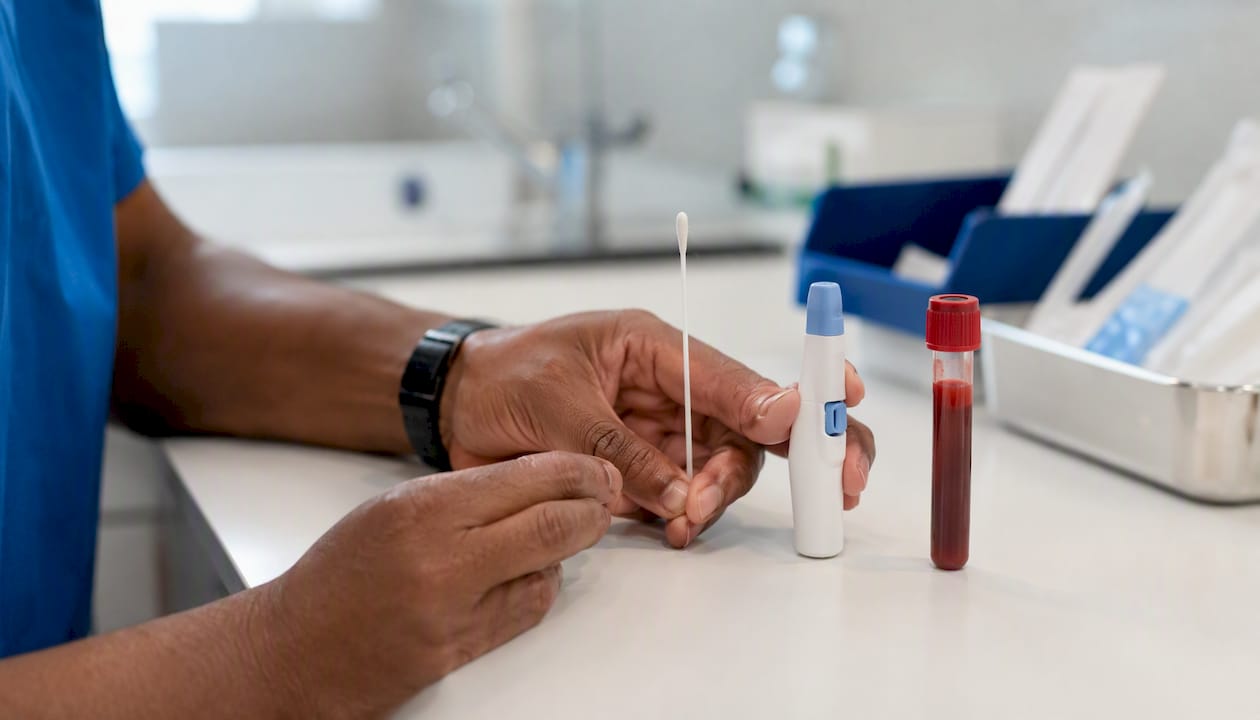
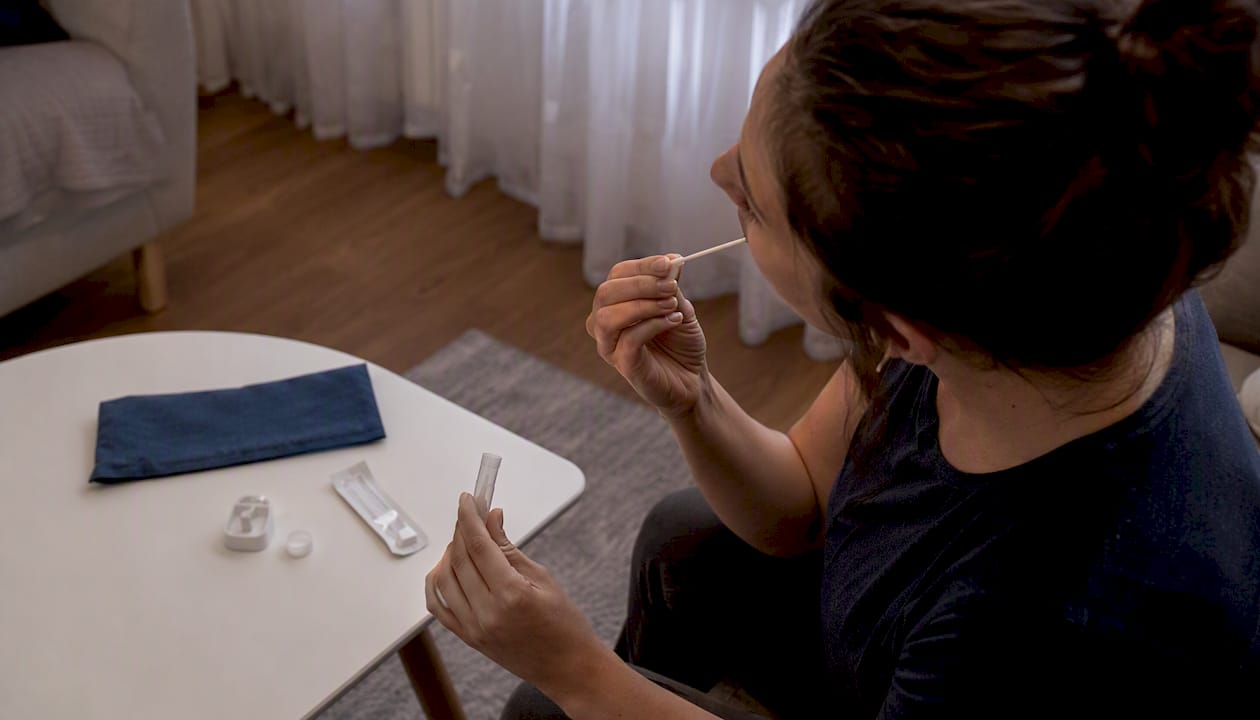
The specimen type also changes how early a test can detect infection. Venous plasma is the most sensitive medium because it contains the highest concentration of viral markers. Fingerprick blood is slightly less concentrated. Oral fluid (gum swabs) contains antibodies at much lower levels than blood, which is why oral-fluid self-tests tend to have longer window periods than blood-based tests.
Most over-the-counter self-tests are antibody-only designs. They skip RNA and p24 antigen detection entirely, which means they cannot pick up infection during the earliest weeks. That is the core reason the HIV home test window is longer than what you would get from a 4th-generation lab test.
| Test type | What it detects | Specimen |
|---|---|---|
| NAT (nucleic acid test) | HIV RNA | Venous blood |
| 4th-generation lab test | p24 antigen + IgM/IgG antibodies | Venous blood/plasma |
| Antigen/antibody fingerstick | p24 antigen + antibodies | Fingerprick blood |
| Antibody rapid/self-test | IgM/IgG antibodies only | Oral fluid or fingerprick blood |
What are the practical window periods for each HIV test type?
Knowing the general range for each test type helps you choose the right test at the right time. The figures below reflect CDC and HIV.gov guidance alongside peer-reviewed data, and they apply to the U.S. context.
NAT can detect HIV approximately 10–33 days after exposure, making it the earliest available option. It requires a venous blood draw and lab processing, so it is not available as a home test. Fourth-generation lab antigen/antibody tests have a median window of about 18 days, with 99% of infections detectable within roughly 44 days for plasma samples. Fingerstick antigen/antibody tests perform similarly but with a slightly longer window because of the lower specimen volume. Antibody-only rapid and self-tests, including oral-fluid home kits, typically require 23–90 days.
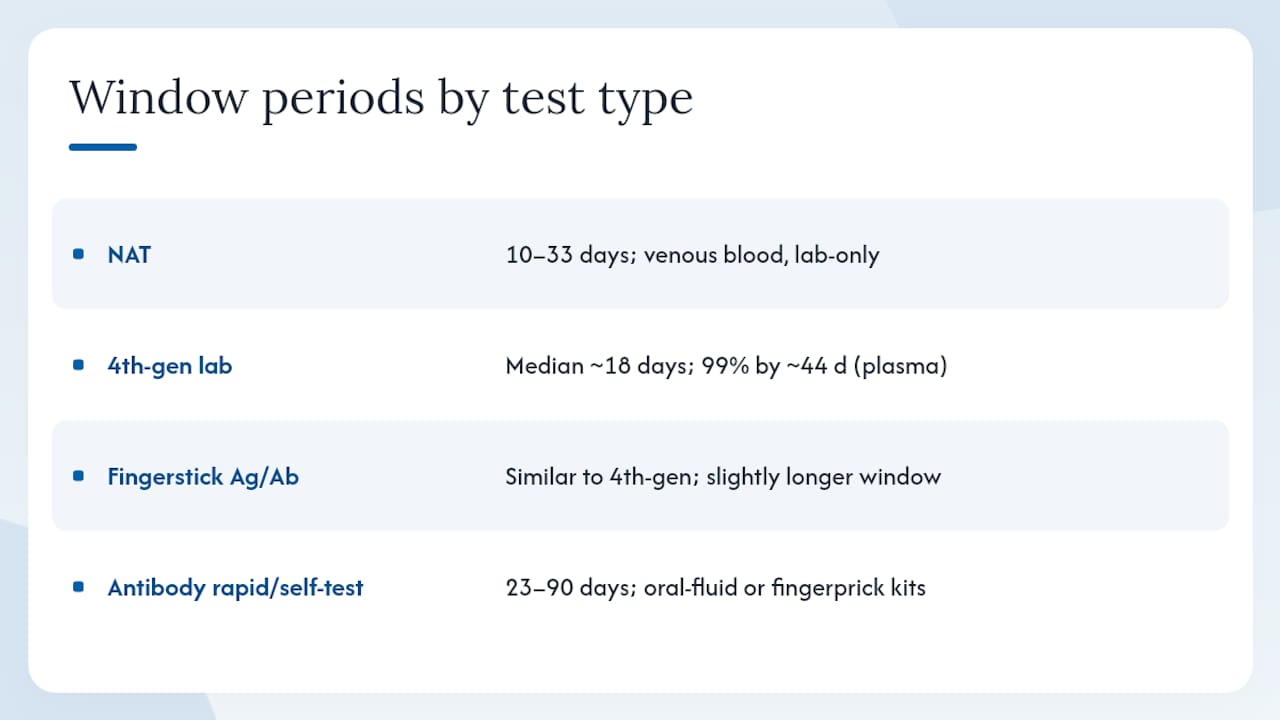
The 90-day figure is a conservative, population-level safety margin. Most people will seroconvert and become detectable earlier, but the 90-day standard accounts for biological variability across individuals. Rapid and point-of-care tests have longer window periods than 4th-generation lab tests precisely because plasma-based estimates must be extended when using fingerprick blood or oral fluid.
What should you know about at-home HIV tests and OraQuick?
The OraQuick In-Home HIV Test is the only FDA-cleared over-the-counter oral-fluid HIV self-test available in the United States. It detects HIV-1 and HIV-2 antibodies using a gum swab, and results are typically ready within the manufacturer’s stated time frame, usually around 20–40 minutes. Because it is antibody-only and uses oral fluid, its detection window aligns with the broader 23–90 day range.
Reading your OraQuick result correctly: One line in the test region means a negative result. Two lines, regardless of how faint the second line appears, indicate a reactive (preliminary positive) result. A reactive result requires immediate confirmatory lab testing. Do not interpret a faint second line as negative.
Key points about using an at-home kit:
- Window period: The CDC notes that antibody self-tests can detect HIV 23–90 days after exposure. For full confidence in a negative result, 90 days is the standard.
- Read window: Results must be read within the manufacturer’s specified time frame, typically 20–40 minutes for oral-fluid tests. Reading too early or too late can produce misleading results.
- Confirmatory testing: A reactive self-test result is not a diagnosis. Official guidance from Hiv is clear that any reactive result must be confirmed with a laboratory test.
- Self-sampling vs. self-testing: Some services let you collect a blood sample at home and mail it to a lab. These self-sampling kits can often detect infection around 4 weeks, though oral-fluid self-tests may need up to 12 weeks for full confidence.
People on PrEP, PEP, or antiretroviral therapy may experience delayed antibody responses, which can extend the window period further. In those situations, a lab-based antigen/antibody test or NAT is the better choice.
How accurate are home tests, and where does oral fluid fall short?
Self-tests are genuinely reliable tools, but their accuracy has real limits that depend on specimen type and how carefully you follow instructions. A systematic review and meta-analysis found near-perfect agreement between self-testers and health-care workers overall, with specificity commonly above 98%. That means false positives are uncommon.
That lower floor for oral-fluid sensitivity matters. Lower sensitivity rates in some oral-fluid tests mean that a proportion of true infections could be missed in some scenarios. Blood-based tests close that gap considerably.
The most common reasons for inaccurate results are errors in specimen collection (such as insufficient sample or poor technique), followed by misinterpretation of faint lines and reading results outside the manufacturer’s specified time window.
Pro Tip: Watch the manufacturer’s instructional video before opening the kit. Studies show that users who receive clear instructions or video guidance achieve better sensitivity than those who rely on the paper insert alone.
When should you retest, and what do you do after any result?
Timing your response after a possible exposure is where the guidance gets specific. Here is a stepwise approach based on CDC and HIV.gov recommendations:
- Day 0–72 (immediately after high-risk exposure): Contact a clinic, emergency room, or doctor about PEP. PEP must start within 72 hours to be effective. Do not wait for a test result before seeking PEP.
- Day 10–33 (if earlier detection is needed): Request a NAT from a lab or clinic. This is the earliest reliable detection window and is appropriate after a known high-risk exposure.
- Day 18–45: A 4th-generation lab antigen/antibody test can detect most infections by this point, with 99% detectable by roughly 44 days for plasma samples.
- Day 23–45: An at-home antibody test may detect infection, but a negative result at this stage is not yet definitive.
- Day 45–90: Home test reliability increases significantly. A negative result at 90 days post-exposure is considered conclusive for most people using antibody-based tests.
- After a reactive self-test result: Stop and get confirmatory lab testing before drawing any conclusions. Contact a healthcare provider or visit a testing clinic. A reactive result is a signal to act, not a final answer.
- After a negative result within the window period: Retest at 90 days if exposure was recent. Use a detection window guide to understand how biological variability affects timing.
Pro Tip: If you are on PrEP or PEP, do not rely on an oral-fluid home test to confirm your status after a potential exposure. Ask your provider for a lab-based antigen/antibody test or NAT instead, since antibody responses can be delayed in people taking antiretrovirals.
How do you use a home test correctly and read results accurately?
Getting a valid result from an at-home HIV test depends almost entirely on following the manufacturer’s instructions precisely. The test chemistry is reliable; the human steps are where errors happen.
Before you start, lay out all components, wash your hands thoroughly, and check the expiration date. Expired tests can produce unreliable results regardless of technique.
For oral-fluid tests, swab the outer gums (upper and lower) with a single, firm stroke on each. Do not swab the inside of the cheek or the tongue. Place the swab in the developer solution immediately and start a timer. For fingerprick blood tests, warm your hand first to improve blood flow, use the lancet on the side of your fingertip (not the pad), and apply the drop directly to the sample port without smearing.
The result window is not flexible. Read your result at the time specified in the instructions, typically around 20 minutes for oral-fluid tests. Results read before the minimum time may be incomplete. Results read after the maximum time can show false lines as the chemistry continues to react. If you miss the read window, the test is invalid and you need to retest.
Error flags to watch for:
- No control line: The test is invalid. Retest with a new kit.
- Faint second line: Still counts as reactive. Do not dismiss it.
- Result read too early or too late: Invalid. Retest.
Pro Tip: Set a phone timer the moment you place the swab in the solution. Distractions are the most common reason people read results outside the valid window.
When is a lab test or NAT the better choice?
A home antibody test is a practical screening tool, but there are situations where it simply cannot do the job you need it to do.
- Recent high-risk exposure (within 45 days): A 4th-generation lab test or NAT will detect infection weeks earlier than any antibody-only home kit.
- Confirmatory testing after a reactive self-test: Lab testing is not optional here. It is required before any clinical decision is made.
- PrEP or PEP users: Delayed antibody responses mean oral-fluid and even blood-based antibody tests can give false negatives. NAT or lab antigen/antibody testing is the standard in these cases.
- Occupational exposures: Healthcare workers and others with documented occupational exposures need the earliest and most sensitive testing available, which means NAT.
- Symptomatic individuals: If you have symptoms consistent with acute HIV infection (fever, rash, swollen lymph nodes within weeks of exposure), do not wait 90 days. Get a lab test now.
For finding a testing location near you, locator.hiv.gov and gettested.cdc.gov both offer free, searchable directories of clinics and community testing sites across the United States. Lab-based 4th-generation and NAT testing is available through healthcare providers, community health centers, and certified lab services.
Why the “just wait 90 days” advice misses the point
The 90-day window is not a waiting room. It is a ceiling, not a floor. Most people who contract HIV will be detectable on a 4th-generation lab test within 45 days, and on a NAT within 33 days. Telling someone to simply wait three months before testing ignores the fact that earlier detection changes outcomes: it enables faster linkage to treatment, reduces transmission risk, and allows for informed decisions about partners and prevention.
The real lesson from the evidence is that test selection should match the situation. A home antibody test is genuinely useful for routine screening when you are outside the acute exposure window, for regular testing as part of ongoing prevention, and for people who would not otherwise test at all. That last point matters more than it gets credit for. A home test that someone actually uses is more valuable than a lab test they never schedule.
Where the conventional advice falls short is in treating home tests as a universal solution. They are not. For anyone in the first 45 days after a potential exposure, or anyone on antiretroviral medications, the oral-fluid home kit is the wrong tool. Knowing that distinction is what separates a useful testing strategy from a false sense of security.
Countrywidetesting offers lab testing and at-home kits for every stage
When a home test gives you a reactive result, or when you need earlier detection than an antibody kit can provide, the next step is a certified lab. Countrywidetesting connects you to lab testing services processed through CLIA- and CAP-certified laboratories, with straightforward online ordering and no clinic appointment required for many tests. Whether you need confirmatory testing after a self-test result or want the earlier detection window of a 4th-generation antigen/antibody test, the process starts with a simple order online.
Countrywidetesting also carries at-home test kits for individuals who want the convenience of testing privately at home. For anyone navigating a recent exposure or an ongoing prevention routine, having both options in one place means you can match the right test to the right moment. Visit Countrywidetesting to review available kits and lab services, or go directly to the lab testing page to place an order today.
Sources
The guidance in this article draws on the following authoritative sources. Each one is worth bookmarking for follow-up.
Where to find HIV testing in the U.S.: The HIV Services Locator at locator.hiv.gov and the CDC’s testing site finder at gettested.cdc.gov both let you search by ZIP code for free and low-cost testing, including 4th-generation lab tests and NAT services.
- Self Testing | HIV Testing | Let’s Stop HIV Together
- Hiv
- Home HIV testing (self-testing and self-sampling)
- Reliability of HIV rapid diagnostic tests for self-testing compared with testing by health-care workers: a systematic review and meta-analysis
- What is the window period for HIV testing? | aidsmap
This article provides general health information and is not a substitute for professional medical advice. If you have had a recent potential HIV exposure or received a reactive test result, contact a healthcare provider or call 1-800-232-4636 (CDC-INFO) for guidance.