
What a Faint Line on a Drug Test Really Means
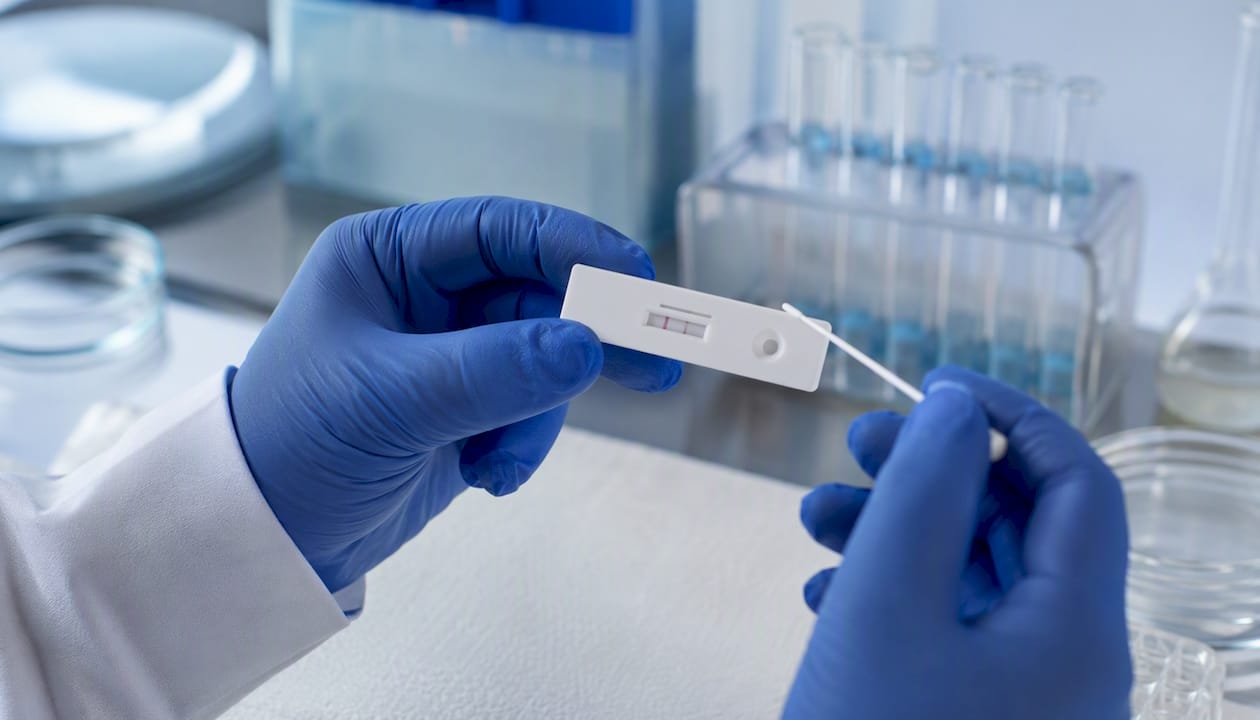
A faint line on a drug test is a negative result on most rapid immunoassay screens — as long as a visible control line is also present. That single rule covers the vast majority of situations. Industry guidance confirms that any visible test line, regardless of intensity, indicates a negative screen on most rapid urine immunoassays; only the complete absence of a test line signals a presumptive positive.
There are a few exceptions worth knowing before you move on:
- No control line visible: The result is invalid. Discard the kit and retest with a fresh one.
- Read outside the manufacturer’s window: Results read too early or too late can be unreliable. Stick to the time range printed on the instructions.
- Expired or damaged kit: An old or improperly stored strip can produce misleading lines.
- Legal, employment, or DOT programs: Some programs require lab confirmation regardless of screen outcome. A faint line in those contexts is not the final word.
Pro Tip: Check the control line before you interpret anything else. If it’s missing or too faint to see clearly, the test is invalid — full stop. Retest with a new kit before drawing any conclusions.
Photograph the result within the read window and keep the kit. You may need it if questions arise later.
Key Takeaways
A faint test line with a visible control line is a negative result on most rapid immunoassay drug tests; when legal, employment, or medical consequences are involved, confirmatory GC-MS or LC-MS/MS testing through an accredited lab is the appropriate next step.
| Point | Details |
|---|---|
| Faint line = negative screen | A visible T line plus a visible C line is a negative result, regardless of line intensity. |
| Control line is the validity check | No control line means the test is invalid; retest with a fresh kit before drawing any conclusion. |
| High-stakes results need lab confirmation | Employment, DOT, and legal situations require GC-MS or LC-MS/MS confirmation with chain-of-custody documentation. |
| Read within the manufacturer’s window | Results read outside the designated time range may show evaporation artifacts, not true test lines. |
| Countrywidetesting for confirmatory testing | Countrywidetesting’s lab send-out services connect you to CLIA/CAP/ISO-accredited labs for confirmed, defensible results. |
Table of Contents
- How does a rapid drug test actually form those lines?
- Why does a test line sometimes look faint?
- How do clinicians, employers, and labs interpret a faint line?
- When should you retest at home versus order a lab confirmation?
- What makes confirmatory lab testing more reliable?
- Will a faint line on a home test predict what a lab will find?
- How do faint lines behave across different test formats?
- How to spot an invalid, ghost, or evaporation line
- Step-by-step: what to do right after seeing a faint line
- A practical perspective on reading faint lines
- Countrywidetesting makes confirmatory testing straightforward
- Sources
How does a rapid drug test actually form those lines?
Rapid drug tests use a method called competitive immunoassay. Understanding the basic mechanism makes faint lines far less confusing.
Inside every test strip, two regions matter:
- Control line ©: Confirms the test ran correctly. It forms regardless of whether a drug is present, as long as the sample flowed through the strip properly. No control line means the test failed mechanically.
- Test line (T): This is where the drug detection happens. Antibodies in the strip are designed to bind to a specific drug metabolite. When the sample contains that metabolite above the cutoff concentration, the antibodies bind to the drug instead of to the strip’s dye-labeled reagent, and the test line does not form. When the drug is below the cutoff, the antibodies bind to the strip and a visible line appears.
The key insight: a line forms when the drug is absent or below the threshold, not when it’s present. This is the opposite of what many people expect.
Line darkness is not a measurement. A faint test line does not mean “a little bit of the drug.” It simply means the analyte concentration in the sample fell below the cutoff at the time of testing. These are qualitative screens, not quantitative ones. Think of it like a light switch rather than a dimmer — the test is either negative or not negative, and the shade of the line doesn’t change that binary outcome.
Why does a test line sometimes look faint?
Several factors can cause a test line to appear lighter than expected. Point-of-care testing guidance identifies the most common culprits: low analyte concentration near the detection cutoff, a diluted specimen, or strip variability. Here’s a fuller breakdown:
Analytical reasons (near the cutoff)
- The drug metabolite is present in the sample but at a concentration just below the detection threshold. The test line forms, but weakly.
- This is the most common cause of a faint line and the least alarming.
Pre-analytical factors (sample-related)
- Drinking large amounts of water before testing dilutes urine, lowering metabolite concentration and potentially producing a faint line even when use occurred recently.
- The timing of collection matters. Metabolite levels fluctuate throughout the day and decline as the body processes substances.
- Individual metabolism, body composition, and frequency of use all affect how quickly metabolites clear.
Kit-related factors
- Strips stored in heat, humidity, or direct sunlight degrade faster than the labeled expiration date suggests.
- Expired kits can produce weak or inconsistent lines.
- Lower-cost strips sometimes show more variability in line intensity than clinical-grade devices.
Reading issues
- Viewing the result outside the manufacturer’s designated window (typically 5 minutes for most urine strips) can produce evaporation lines that mimic a faint test line.
- Poor lighting makes faint lines harder to see and easier to misread.
A note on cutoffs: The standard federal workplace cutoff for THC metabolites in urine is 50 ng/mL under SAMHSA guidelines. A sample at 45 ng/mL would produce a faint test line and read as negative; a sample at 55 ng/mL would show no test line and read as presumptive positive. The line intensity near that threshold can vary noticeably.
Pro Tip: Follow the manufacturer’s instructions exactly — including the read window, storage requirements, and sample volume. Deviating from any one of those steps is the fastest way to get a misleading result.
How do clinicians, employers, and labs interpret a faint line?
The core rule holds across most settings: a visible test line with a valid control line is considered negative, regardless of how faint it appears. That said, the practical response depends on who is reading the result and why.
Personal or at-home use: A faint line is a negative screen. You can retest if you want additional confidence, but no further action is required unless circumstances change.
Clinical or treatment-center settings: Most clinics follow the same visual interpretation rule. However, treatment programs often have internal policies requiring lab confirmation for any result that will influence a clinical decision, particularly when a patient’s care plan depends on the outcome. A faint line in that context may trigger a send-out to a confirmatory lab as a matter of protocol, not because the screen was positive.
Employer and DOT programs: Federal workplace testing under Department of Transportation rules requires that any non-negative screen be sent to a certified laboratory for confirmation before any employment action is taken. A faint line is still technically a negative screen, but some employer programs add their own internal confirmation thresholds. When in doubt, check the specific program’s written policy.
Confirmatory methods: When a screen result needs to be verified, laboratories use gas chromatography-mass spectrometry (GC-MS) or liquid chromatography-tandem mass spectrometry (LC-MS/MS). These methods identify and quantify specific metabolites with far greater precision than a rapid strip. They are the definitive standard for legal and employment purposes.
Practical trust practices to follow in any setting:
- Always verify the control line before reading the test line.
- Document the time you read the result and photograph it within the manufacturer’s window.
- Keep the used kit until the situation is fully resolved.
- Follow the manufacturer’s read-time instructions without exception.
When should you retest at home versus order a lab confirmation?
The right path depends on what’s at stake. Here’s a straightforward decision framework:
- Invalid result (no control line, damaged strip, expired kit): Retest immediately with a fresh kit from a new package. Do not interpret an invalid result.
- Faint line with no legal or occupational stakes: The screen is negative. An optional retest with a fresh kit can provide reassurance, but it is not required.
- Faint line with employment, legal, or medical stakes: Order a confirmatory lab test. A rapid screen is not sufficient for these purposes.
- Faint line in a DOT or federally regulated program: Follow the program’s chain-of-custody protocol. The screen result alone does not determine the outcome.
For at-home retesting, use a fresh kit from a sealed package. A multi-panel cup test or dip card gives you a clean second read without the variables of an already-opened strip.
For confirmatory lab testing, the process involves:
- Selecting the appropriate test panel (the substances you need confirmed).
- Collecting a specimen under chain-of-custody (COC) protocols, which document who handled the sample and when.
- Shipping to an accredited laboratory.
- Receiving a written report with quantified results.
Chain-of-custody documentation is non-negotiable when results will be used in employment decisions, legal proceedings, or DOT compliance. Without it, results can be challenged and dismissed. Confirmatory lab tests typically return results within 24–72 hours depending on the lab and panel. Costs vary by panel and provider; calling the lab directly for a current price range before ordering is the most reliable approach.
What makes confirmatory lab testing more reliable?
Confirmatory testing with GC-MS or LC-MS/MS operates on a completely different principle than a rapid strip. Where a strip gives a binary line-or-no-line readout, a mass spectrometry method identifies the exact chemical structure of a metabolite and measures its concentration. That specificity makes it far harder to challenge.
GC-MS has been the forensic gold standard for decades. It separates compounds by their physical properties and then identifies them by molecular weight. Highly sensitive and specific, it’s widely accepted in court and by federal agencies.
LC-MS/MS handles a broader range of compounds, including some that don’t survive the heat required for GC-MS. It’s increasingly common in clinical and workplace labs and offers comparable specificity.
Accredited laboratories matter because accreditation bodies like CLIA, CAP, and ISO hold labs to documented quality standards, proficiency testing, and chain-of-custody procedures. SAMHSA maintains a certified laboratory list specifically for workplace drug testing programs, and using a lab on that list is the appropriate standard when results will affect employment or legal outcomes.
To order a confirmatory test through Countrywidetesting’s lab testing services:
- Select your panel and specimen type on the platform.
- Collect your specimen following the COC instructions provided.
- Ship the sample to the designated lab partner.
- Receive your final written report, typically within 24–72 hours.
Pro Tip: Ask the lab to provide its method, cutoff levels, and accreditation documentation in writing before submitting a sample. If results are ever challenged, that documentation is your first line of defense.
Will a faint line on a home test predict what a lab will find?
Usually, yes. A negative screen (faint test line) most often aligns with a negative confirmatory result. But “most often” is not “always,” and the gap matters when stakes are high.
Here’s why discordance can occur:
- Near-cutoff concentrations: A sample at a concentration near the detection cutoff for THC metabolites produces a faint line and reads as negative on a strip. A lab using a lower confirmation cutoff might still detect and quantify that metabolite. Different programs use different cutoff thresholds, and the two numbers don’t always match.
- Detection windows: Rapid screens and lab tests use the same specimen, but the detection window for a substance depends on the drug, frequency of use, and specimen type. Drug metabolism and detection windows vary considerably across individuals and substances, which means a faint line on a home test taken on one day doesn’t guarantee a clean lab result on a different day.
- Cross-reactivity: Some rapid strips can react to structurally similar compounds, including certain over-the-counter medications, producing a faint or absent test line that a confirmatory test would not replicate. For a deeper look at how interfering substances affect results, the false positive hair follicle test article covers cross-reactivity in detail.
The practical takeaway: a faint line on a home screen is a strong indicator of a negative lab result, but it is not a guarantee. When the outcome matters, confirm with a lab. For a direct comparison of at-home tests versus lab-based tests, the accuracy differences are worth reviewing before making a decision.
How do faint lines behave across different test formats?
The interpretation principle stays the same across formats, but each device type has its own quirks.
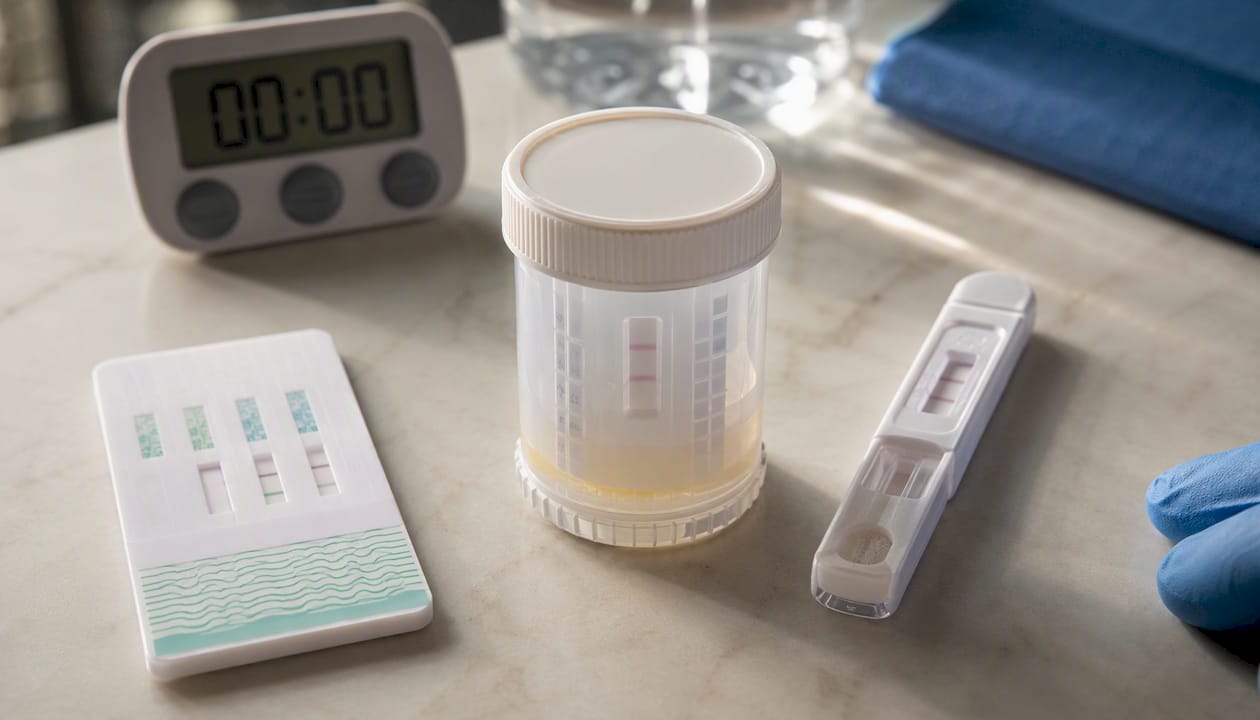
Urine dip cards and dipsticks: The most common format for at-home and workplace screening. Visual read rules apply directly: C line present plus T line present (even faint) equals negative. These strips are sensitive to read timing and storage conditions.
Integrated cup tests: Cup-style devices like a 12-panel cup test combine specimen collection and testing in one sealed unit. Many include tamper-evident features and built-in temperature strips to verify specimen validity. The faint-line interpretation rule is identical, but the sealed format reduces handling variables.
Oral fluid (saliva) swabs: Oral tests use different antibody formulations and typically have shorter detection windows than urine tests. A faint line on an oral swab follows the same visual logic, but the cutoffs and detection windows differ from urine-based panels. Faint lines are somewhat less common on oral tests because the detection window is narrower — substances clear saliva faster than urine.
Pro Tip: Digital readers and smartphone-compatible test apps are now available for some rapid test formats. They eliminate the subjectivity of judging line intensity by eye, which is particularly useful when a line is borderline faint. If you’re making a consequential decision based on a rapid screen, a digital reader adds a layer of objectivity.
How to spot an invalid, ghost, or evaporation line
Not every line you see on a test strip is a real result. Knowing the difference protects you from acting on a misleading read.
Signs that a result is invalid:
- The control line is absent or too faint to see clearly.
- The strip was read before the minimum time or after the maximum time in the manufacturer’s window.
- The test strip shows visible damage: discoloration, wet spots, or physical creasing.
- The kit was expired or stored improperly (heat, humidity, direct sunlight).
- The sample volume was insufficient or the wrong fluid type was used.
Evaporation and ghost lines are a specific hazard. When a strip dries out after the read window closes, residual reagents can migrate and leave a faint shadow in the test line area. These lines are typically:
- Lighter and less defined than a true test line.
- Visible only after the manufacturer’s read window has passed.
- Inconsistent in position compared to a true T line.
Reading the result at the correct time, in good lighting, is the most reliable way to avoid misreading an evaporation artifact as a true negative.
Pro Tip: Photograph the result within the read window, ideally with a timestamp. Keep the physical test device until the situation is resolved. If a result is ever disputed, the photograph and the device itself are your evidence.
Step-by-step: what to do right after seeing a faint line
- Verify the control line first. If it’s absent or unclear, the test is invalid. Stop here and retest with a fresh kit.
- Confirm you’re within the read window. Check the instructions for the minimum and maximum read time. If you’re outside that range, the result is unreliable.
- Photograph the result with a timestamp. Do this before the window closes, even if you think the result is straightforward.
- Check the kit’s expiration date and storage history. A kit stored in a hot car or bathroom cabinet may have degraded before its labeled expiration.
- Retest with a fresh kit if you have any doubt. Use a new, sealed kit from a different package. A second negative screen adds confidence.
- Assess the stakes. If the result is for personal information only, a negative screen is sufficient. If it’s for employment, a legal proceeding, a DOT program, or a clinical decision, move to step 7.
- Order a confirmatory lab test with chain-of-custody documentation. Collect the specimen per COC instructions, ship to an accredited lab, and retain all documentation. For guidance on what an unclear result means and what to do next, see what an inconclusive drug test means.
When employment or legal consequences are on the line, a rapid screen result alone is never the final answer. Chain-of-custody documentation and an accredited lab report are the only results that hold up to scrutiny.
A practical perspective on reading faint lines
The most common mistake people make with faint lines is treating uncertainty as a problem to solve by looking harder at the strip. The line is either there or it isn’t, and if it’s there, the test has done its job. The real question is whether the screen’s answer is sufficient for your situation.
For personal peace of mind, a faint line on a properly run test with a valid control line is a negative result. That’s the answer, and second-guessing the shade of the line doesn’t change the chemistry.
For anything with consequences — a job offer, a legal case, a treatment program — the screen is the starting point, not the conclusion. Confirmatory testing with GC-MS or LC-MS/MS through an accredited lab is the only result that carries real weight. Countrywidetesting’s lab testing services offer a direct path to that confirmation, with access to certified partner labs and clear chain-of-custody options.
The faint line isn’t the problem. Acting on a screen result alone when the stakes demand a lab confirmation — that’s where things go wrong.
Countrywidetesting makes confirmatory testing straightforward
When a faint line leaves you needing certainty, Countrywidetesting gives you a direct route to accredited lab confirmation without the complexity of navigating a clinical facility.
Through Countrywidetesting’s lab testing services, you get access to:
- CLIA, CAP, and ISO-accredited laboratory partners for defensible, court-ready results.
- GC-MS and LC-MS/MS confirmatory panels covering the most common workplace and personal testing needs.
- Clear chain-of-custody options for employment, DOT, and legal compliance.
- Online ordering with straightforward instructions for specimen collection and shipping.
Before placing an order for a legally sensitive test, verify the specific accreditation and turnaround time directly with the lab for your panel. For most standard panels, results return within 24–72 hours. Visit Countrywidetesting to review available panels and place your order.
Sources
The following sources informed this article and are worth consulting directly for additional detail:
Readers with employment or legal concerns should confirm current program-specific cutoffs and chain-of-custody requirements directly with their lab and program administrator before acting on any screen result.
This article is general information, not a substitute for advice from a qualified doctor. Consult a qualified healthcare professional about your own circumstances before acting on anything here.