
Why Multi-Panel Tests Are Used in Drug Screening
TL;DR:
- Multi-panel drug tests detect multiple substances from a single sample, making screening more efficient and comprehensive. They are widely used across workplaces, healthcare, and law enforcement to save time, reduce costs, and improve detection accuracy. These tests are recommended for programs requiring regulatory compliance, broad substance coverage, or rapid results.
Multi-panel drug tests are defined as screening tools that detect multiple substances simultaneously from a single biological sample. That single capability explains why multi-panel tests are used across workplaces, clinics, and compliance programs far more often than single-substance alternatives. A 5-panel urine test, for example, checks for marijuana, cocaine, opiates, amphetamines, and PCP in one step. Organizations relying on SAMHSA, CLIA, and CAP-certified labs get results that hold up to regulatory scrutiny without running five separate tests.
Why multi-panel tests are used: the core reason
Multi-panel testing is the industry term for any screening method that checks for two or more substances in a single test run. The core reason organizations choose it over single-substance testing is efficiency without sacrificing coverage.
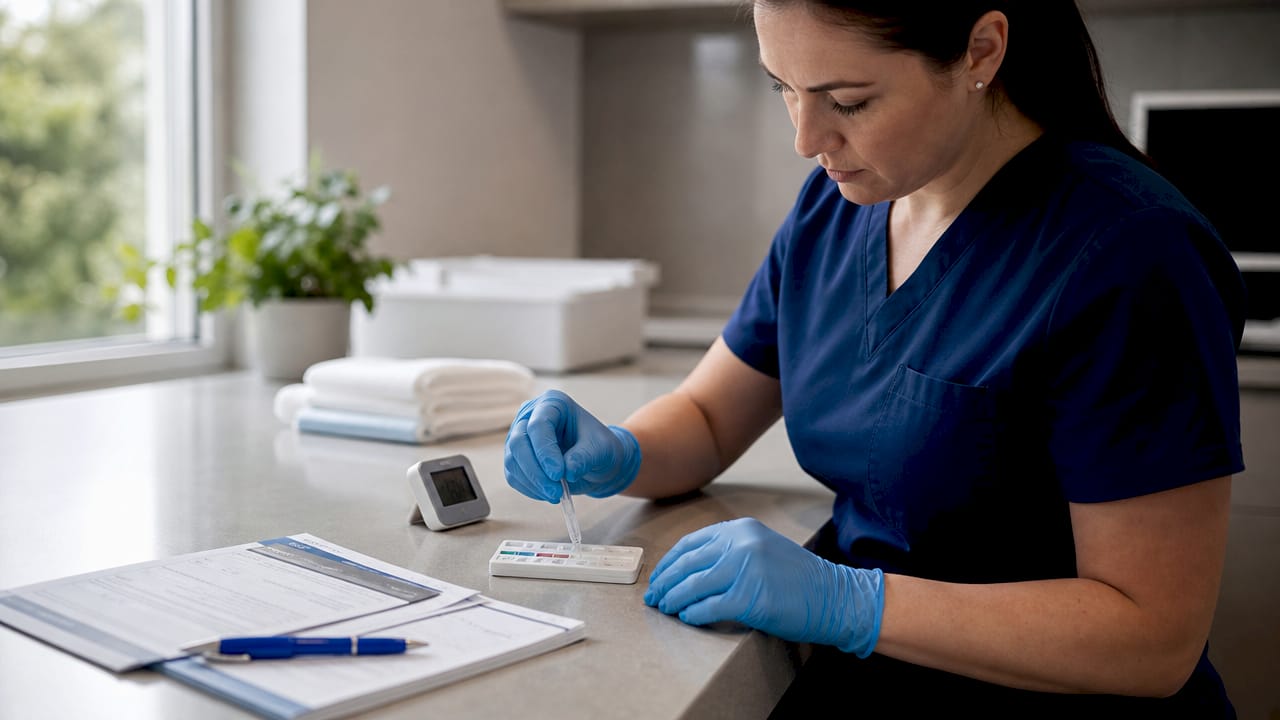
Point-of-care multi-panel results are typically available in about 5 minutes. That speed matters enormously in pre-employment screening, post-accident testing, and random compliance checks where delays cost time and money. A single urine sample, one collection event, and one technician review replace what would otherwise require multiple kits, multiple collections, and multiple result reviews.
Multi-panel tests also reduce missed positives that single-substance testing produces when the specific drug in a person’s system is unknown. If a safety manager suspects substance use but does not know which drug, a 10-panel or 12-panel test covers the most likely candidates at once. That breadth is the defining advantage.
How do multi-panel drug tests work?
Two main technologies power multi-panel drug testing: immunoassay and multiplex PCR.
Immunoassay is the method behind most point-of-care urine test cups and strips. Each panel on the device contains antibodies that react to a specific drug metabolite. A positive result appears when the concentration of that metabolite exceeds a preset cutoff level. The test reads multiple panels simultaneously, which is why a 12-panel cup delivers results for twelve substances in the same 5-minute window.
Multiplex PCR takes a different approach. It amplifies multiple DNA or molecular targets in a single reaction, which is standard in clinical and forensic lab settings. Multiplex PCR delivers results in 3–4 hours compared to 3 days for traditional culture methods. That reduction in turnaround time is significant for hospital toxicology units and law enforcement labs that cannot afford to wait.
Key features of both methods:
- Single sample collection: One urine, oral fluid, or blood draw covers all panels.
- Simultaneous detection: All substances are screened in the same reaction or device read.
- Standardized cutoffs: Labs follow SAMHSA-established concentration thresholds for each substance.
- Confirmatory pathway: Presumptive positives from immunoassay screens go to GC-MS or LC-MS/MS confirmation.
Pro Tip: If your program requires results that hold up in a legal or regulatory proceeding, always pair a point-of-care screen with a SAMHSA-certified lab confirmation step. The screen gives speed; the lab confirmation gives defensibility.
What are the main benefits of multi-panel drug testing?
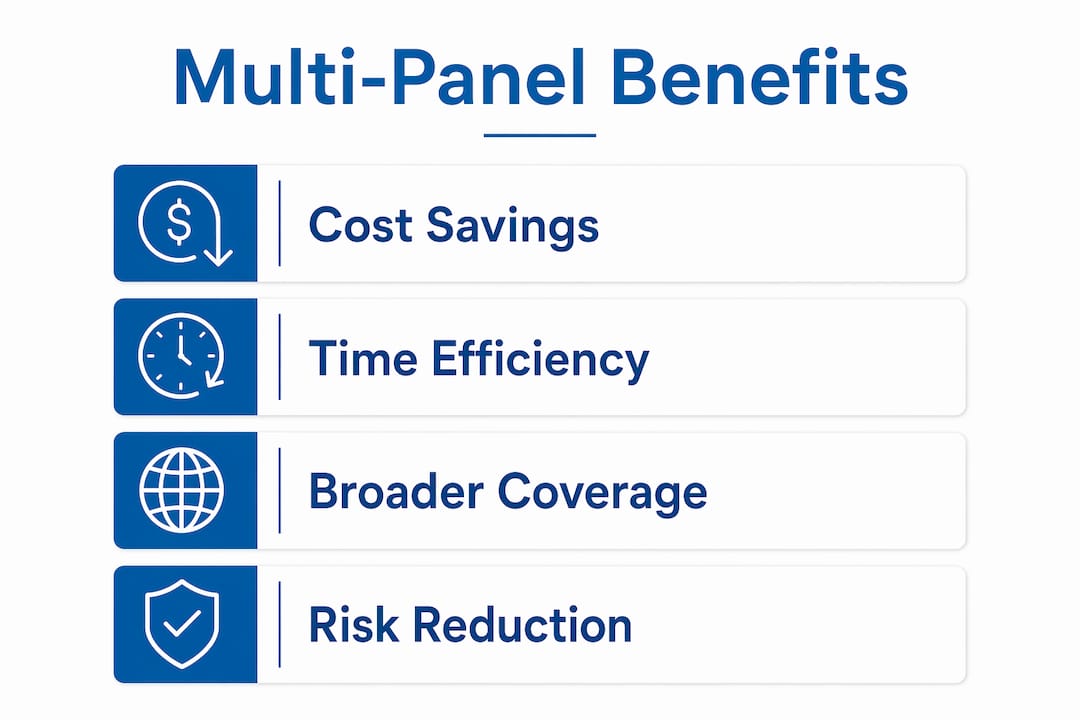
The practical advantages of multi-panel testing fall into four clear categories.
1. Cost reduction through consolidation
Consolidating multiple drug assays into a single test device reduces reagent consumption, labor costs, and the frequency of specimen collection. Running five separate single-substance tests means five kits, five collection events, and five result reviews. A single 5-panel test replaces all of that. For employers running hundreds of screens per year, the savings compound quickly.
2. Time savings at every stage
Multi-panel panels save time and allow earlier detection compared to sequential single tests. A pre-employment program that once took two days per candidate can return results the same morning. That speed reduces the gap between offer and start date, which matters in high-volume hiring.
3. Broader detection coverage
Testing multiple substances simultaneously increases diagnostic accuracy and reduces the chance of missing a substance that was not specifically targeted. Doctors apply the same logic when ordering comprehensive blood panels. A multi-panel drug test applies that same principle to substance screening.
4. Risk reduction in safety-sensitive roles
Multi-panel tests are preferred in transportation, construction, and other safety-critical industries to meet regulatory compliance. A truck driver impaired by a combination of opioids and benzodiazepines would pass a single-substance opioid screen if benzodiazepines were not included. A 10-panel or 12-panel test catches both.
Pro Tip: For HR managers building a new drug testing program, review the common drug panels used in your industry before selecting a panel size. Industry norms often align with regulatory requirements.
Where are multi-panel tests most commonly applied?
Multi-panel testing appears across a wider range of settings than most professionals realize.
Workplace screening programs represent the largest application. Employers in federally regulated industries, including Department of Transportation-covered roles, are required to screen for specific substance categories. A standard DOT 5-panel test covers marijuana, cocaine, opiates, amphetamines, and PCP. Many private employers expand to 10-panel or 12-panel tests to cover prescription drug misuse, including benzodiazepines and barbiturates.
Clinical and healthcare settings use multi-panel urine drug screens to monitor patients on chronic pain management programs, assess overdose cases in emergency departments, and screen for substance use disorders before surgery. The drug testing panels used in these contexts often mirror workplace panels but with additional clinical substances.
Forensic and law enforcement applications rely on multiplex PCR-based panels for post-mortem toxicology, DUI investigations, and criminal case evidence. Speed and accuracy are both critical in these contexts, and multi-panel lab tests deliver both.
Probation and court-ordered monitoring programs use multi-panel tests to verify compliance with substance-free conditions. A single test per visit covers the full range of prohibited substances without requiring multiple collections.
At-home screening is a growing segment. Individuals use multi-panel test kits to check their own status before a workplace test, or to monitor a family member’s recovery. Countrywidetesting offers at-home options that cover up to 12 substances from a single urine sample.
Multi-panel vs. single-substance drug tests: what is the difference?
Single-substance tests screen for exactly one drug or drug class. They are appropriate when a specific substance is already confirmed or strongly suspected, such as a targeted follow-up after a positive multi-panel screen. They cost less per test and produce a simpler result. The limitation is obvious: they miss everything else.
Multi-panel tests cover the field. Multiplexing reduces reagent consumption and labor while increasing laboratory throughput without proportionally increasing hands-on time. That operational advantage makes multi-panel the default choice for any program where the substance is unknown or where comprehensive coverage is required.
| Feature | Multi-panel test | Single-substance test |
|---|---|---|
| Substances detected | 2–12 or more | 1 |
| Sample collections needed | 1 | 1 per substance |
| Cost per substance screened | Lower | Higher at scale |
| Best use case | Unknown substance, compliance programs | Targeted follow-up, specific monitoring |
| Turnaround time | Same as single test | Same as multi-panel |
| Regulatory fit | DOT, SAMHSA, workplace programs | Specialized clinical follow-up |
Choosing between panel sizes, such as a 5-panel versus a 12-panel, depends on your regulatory requirements and the substances most relevant to your workforce. The 5-panel vs. 12-panel comparison covers the practical differences in detail for employers deciding between options.
Key Takeaways
Multi-panel drug tests are the most cost-effective and reliable method for comprehensive substance screening because they detect multiple drugs from a single sample in a single step.
| Point | Details |
|---|---|
| Speed advantage | Point-of-care multi-panel results are available in about 5 minutes, cutting screening delays. |
| Cost efficiency | Consolidating assays into one test reduces reagent use, labor, and specimen collection frequency. |
| Broader coverage | Screening for multiple substances at once reduces the risk of missing an unknown drug. |
| Regulatory alignment | Multi-panel tests meet SAMHSA, DOT, and CLIA standards used in workplace and federal programs. |
| Flexible applications | Multi-panel tests serve workplaces, clinics, forensic labs, and at-home screening equally well. |
Why I think single-substance testing is more outdated than most programs admit
Working with drug testing programs across multiple industries, the pattern I see most often is organizations defaulting to a 5-panel test because it is what they have always used, not because it fits their current risk profile. Prescription drug misuse, particularly opioids and benzodiazepines, has shifted the substance landscape significantly. A standard 5-panel test does not cover either of those categories.
The technology argument for multi-panel testing has also moved well past convenience. Multi-disease and multi-drug panels now catch complex health and safety risks before they escalate. That is a clinical necessity, not a feature upgrade. The organizations I have seen handle post-accident investigations most effectively are the ones running 10-panel or 12-panel screens as their baseline, not their exception.
My practical advice: review your panel selection against your actual incident history and your industry’s current substance trends every 12 months. The substances driving impairment in 2026 are not the same ones that drove the original 5-panel standard. If your panel has not changed in five years, it probably needs to. Countrywidetesting’s 5-panel vs. 10-panel guide is a good starting point for that review.
— Alan
Countrywidetesting’s multi-panel screening options
Countrywidetesting offers a full range of multi-panel drug tests for employers, HR teams, and individuals who need reliable, fast results.
The lab testing services include SAMHSA, CLIA, and CAP-certified processing for urine and oral fluid samples, covering panels from 5 to 12 substances. For individuals who need results at home, the 12-panel at-home cup test delivers comprehensive screening from a single urine sample with results in minutes. Every product connects to certified lab confirmation when a presumptive positive requires follow-up. Whether you are building a workplace compliance program or screening for personal awareness, Countrywidetesting has a panel option that fits.
FAQ
What does a multi-panel drug test screen for?
A multi-panel drug test screens for two or more substances simultaneously from a single sample. Common panels cover marijuana, cocaine, opiates, amphetamines, PCP, benzodiazepines, and other substances depending on panel size.
How fast do multi-panel test results come back?
Point-of-care multi-panel tests return results in about 5 minutes. Lab-based multiplex PCR panels deliver results in 3–4 hours, compared to 3 days for traditional methods.
Are multi-panel tests more accurate than single-substance tests?
Multi-panel tests reduce false negatives by screening for multiple substances when the specific drug is unknown. Single-substance tests are equally accurate for their target but miss everything outside their scope.
Which industries require multi-panel drug testing?
Transportation, construction, and other safety-critical industries use multi-panel tests to meet DOT and SAMHSA regulatory requirements. Many private employers in healthcare, manufacturing, and logistics also use them for compliance and safety programs.
Can individuals use multi-panel tests at home?
Yes. At-home multi-panel urine test kits are available for personal use and cover up to 12 substances from a single sample. They are commonly used for pre-employment preparation or family monitoring purposes.