
How Accurate Are At-Home Drug Tests, Really?
The FDA describes home-use urine drug screens as “fairly sensitive” while making clear that any presumptive positive must be confirmed by a certified laboratory, because foods, supplements, and prescription medications can all affect results. The laboratory gold standard for confirmation is gas chromatography-mass spectrometry (GC-MS) or liquid chromatography-tandem mass spectrometry (LC-MS/MS), both of which are far more specific than the immunoassay strips used in home kits.
If you have a result in hand right now, here is what to do:
- Positive result: Do not take any irreversible action. Verify all current medications and supplements, then send the sample to a certified laboratory for GC-MS or LC-MS/MS confirmation before drawing conclusions.
- Uncertain timing: If you tested too early or too late relative to potential use, retest within the appropriate detection window for the sample type you used.
- Medical concerns: Consult a clinician, especially if unexpected symptoms accompany the result or if the person being tested takes prescription medications that could cross-react.
- Legal or employment consequences: Contact HR or legal counsel before acting on any home test result. Chain-of-custody lab testing is the only format most courts and employers will accept.
Key Takeaways
| Point | Details |
|---|---|
| No home test is fully accurate | At-home immunoassay screens are reliable for initial screening but produce false positives and false negatives. |
| Confirm positives with a certified lab | GC-MS and LC-MS/MS confirmation is the gold standard; the FDA recommends lab follow-up for any presumptive positive. |
| Timing and sample type matter | Detection windows vary widely by drug class and specimen; urine covers recent use, hair reflects weeks to months. |
| Cross-reactivity is a documented risk | Medications including decongestants, antibiotics, and prescription stimulants can trigger false positives on immunoassay panels. |
| Countrywidetesting offers certified confirmation | The platform connects users to SAMHSA, CLIA, CAP, and ISO-certified labs for legally defensible confirmatory testing. |
Table of Contents
- How does home drug test accuracy compare to lab testing?
- What factors affect the accuracy of an at-home test?
- What are the typical detection windows by sample type?
- What causes false positives and false negatives?
- Why does laboratory confirmatory testing matter?
- How to use an at-home drug test correctly
- What should you do after a positive or negative result?
- Limitations of at-home tests and when to seek professional help
- How lab certifications improve reliability
- A note on responsible use of at-home testing
- Countrywidetesting’s lab confirmation and vetted kits
- Sources
How does home drug test accuracy compare to lab testing?
Most at-home kits use immunoassay technology. An immunoassay works by binding drug molecules (or molecules that resemble them) to antibodies on a test strip. When enough of a target substance is present, the reaction produces a visible line, or the absence of one, depending on the kit’s design. This method is fast, inexpensive, and requires no specialized equipment, which is exactly why it dominates the consumer market.
The limitation is specificity. Immunoassays are designed to detect a class of substances, not a single molecule. A test strip for opioids, for example, will react to a range of opioid-like compounds, including some that are not illicit drugs at all. That is the root cause of most false positives.
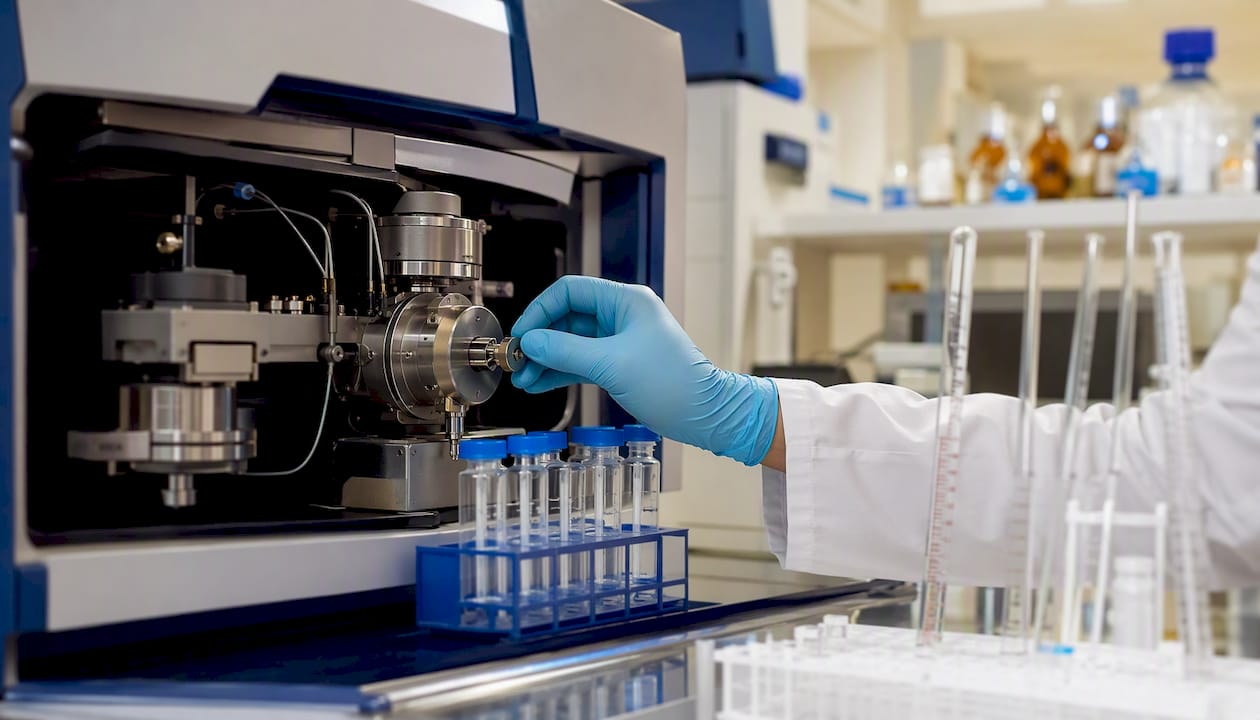
Laboratory methods work differently. GC-MS and LC-MS/MS separate individual compounds by molecular weight and chemical structure before measuring them, which is why they can identify a specific drug and its metabolites with a precision immunoassays cannot match. Labs also use calibrated instruments, internal reference standards, and confirmatory cutoff thresholds that are typically lower than those used in screening kits.
The table below summarizes the key differences between the two approaches.
| Feature | At-home immunoassay screen | Lab confirmatory test (GC-MS/LC-MS/MS) |
|---|---|---|
| Technology | Antibody-based lateral flow | Mass spectrometry |
| Turnaround | Minutes | Hours to days |
| Specificity | Moderate (class-level detection) | High (compound-level identification) |
| Quantitation | No (positive/negative only) | Yes (measures exact concentration) |
| False positive risk | Higher | Very low |
| Legal defensibility | Rarely accepted | Accepted in court and employment |
| Cost | Low | Higher |
When is an instant screen appropriate?
- Personal monitoring or general awareness when no legal or employment stakes are involved
- Initial triage before deciding whether to pursue lab confirmation
- Parental monitoring with the understanding that any positive warrants follow-up
When should you go straight to a lab?
- Court-ordered testing, probation, or custody proceedings
- Workplace testing with potential disciplinary consequences
- Any situation where a false positive could cause serious harm
What factors affect the accuracy of an at-home test?
At-home tests are convenient and mostly accurate for screening, but they are not 100% reliable. Several variables can push a result toward a false positive or a false negative, and understanding them helps you weigh what a result actually means.
- Sample type: Urine is the most common and generally the most sensitive medium for recent use. Saliva is easier to collect but has a shorter detection window. Hair captures longer-term patterns. Blood is rarely used outside clinical settings.
- Timing relative to use: Testing too early or too late relative to the detection window for a given drug class is one of the most common reasons for a false negative.
- Cutoff levels: Every test has a threshold concentration below which it reads negative. A result just under the cutoff may reflect real use that the test simply cannot detect at that level.
- Cross-reactivity: Certain medications, foods, and supplements trigger antibody reactions that mimic a drug response. This is the primary driver of false positives.
- Sample handling and storage: Urine that is too warm, too cold, or stored too long before testing can degrade and produce unreliable results. Test strips exposed to humidity or extreme temperatures before use may also fail.
- Adulteration or dilution: Drinking large amounts of water before a urine test can dilute the sample below the cutoff threshold, producing a false negative. Some people attempt to add substances to a sample to mask results.
- User error: Misreading the result window, testing at the wrong time, or not following collection instructions precisely can all skew outcomes.
- Biological variability: Metabolism, body mass index, kidney function, age, and hydration level all affect how quickly a drug clears the body. Two people who used the same substance at the same time can produce very different results on the same day.
Sensitivity and specificity in plain terms
Sensitivity measures how well a test catches true positives. A highly sensitive test rarely misses actual drug use. Specificity measures how well a test avoids false positives. A highly specific test rarely flags something that is not there. Peer-reviewed clinical literature documents variability in immunoassay sensitivity and specificity across drug classes, which is why the same kit may perform well for one substance and less reliably for another. Raising the cutoff threshold improves specificity but reduces sensitivity, and vice versa. There is no setting that eliminates both error types simultaneously.
Pro Tip: For the best chance of detection, collect a urine sample from the first void of the morning. Drug metabolite concentrations are typically highest at that point, reducing the chance of a false negative due to dilution.
What are the typical detection windows by sample type?
Detection windows vary by drug class, sample type, frequency of use, and individual metabolism. The ranges below reflect published clinical literature on specimen types and detection windows and should be treated as estimates, not fixed cutoffs. Heavy or chronic use generally extends windows; single or infrequent use shortens them.
A few points worth keeping in mind:
- Hair testing is the only method that reliably reflects use over a period of weeks to months, but it cannot confirm very recent use (within the past 5–7 days, while the hair grows out from the scalp).
- Saliva testing is increasingly common for roadside and workplace screening because collection is observed and harder to adulterate.
- Blood testing is the most accurate measure of current impairment but has the shortest window and requires a clinical draw.
- Individual variation is real. A chronic cannabis user may test positive in urine for four weeks or longer, while an occasional user may clear in three days.
What causes false positives and false negatives?
False positives and false negatives are not rare edge cases. They are a documented feature of immunoassay-based screening, and cross-reactivity with certain medications and substances is well-established in toxicology literature.
Common causes of false positives
- Decongestants and cold medicines: Pseudoephedrine and phenylephrine can trigger a positive on amphetamine panels.
- Certain antibiotics: Quinolones such as rifampin have been linked to false positives on opioid and other panels.
- Antidepressants: Some SSRIs and tricyclic antidepressants cross-react with panels for amphetamines or PCP.
- Poppy seeds: Morphine and codeine metabolites from poppy seed consumption can produce a positive on opioid screens.
- Prescription stimulants: ADHD medications like amphetamine salts (Adderall) will legitimately trigger an amphetamine panel, which is not a false positive in the technical sense but is frequently misinterpreted without medication context.
- NSAIDs: Ibuprofen and naproxen have been associated with false positives on cannabinoid panels in older immunoassay formats, though this is less common with current kits.
Common causes of false negatives
- Testing outside the detection window (too early or too late)
- A sample diluted by high fluid intake before collection
- A drug concentration that falls below the kit’s cutoff threshold
- A degraded or improperly stored test strip
- A substance not included in the panel (home kits typically screen 5–12 drugs; many substances are not covered)
A real-world scenario
Consider a parent who uses a home urine test on their teenager and gets a presumptive positive for amphetamines. Before any confrontation or consequence, the right move is to check whether the teenager takes a prescription stimulant for ADHD. If so, the result is almost certainly explained by that medication. Sending the sample to a certified lab for GC-MS confirmation would identify the specific compound and its concentration, distinguishing a prescribed medication from illicit use. Pediatric and family-medicine literature has specifically flagged this scenario as a reason why home tests used without clinical guidance can cause unnecessary harm. Acting on a single at-home result without confirmation is a mistake that can damage trust and relationships irreversibly.
Why does laboratory confirmatory testing matter?
The gap between a home screen and a lab confirmation is not just technical. It is the difference between a preliminary signal and a defensible fact.
GC-MS and LC-MS/MS work by first separating the compounds in a sample and then identifying each one by its unique molecular signature. Unlike an immunoassay that reacts to a class of molecules, mass spectrometry can distinguish between, say, methamphetamine and a cold medicine metabolite that happens to share a similar structure. That specificity is why GC-MS and LC-MS/MS are the accepted confirmatory gold standard in toxicology.
Certified labs also apply confirmatory cutoff thresholds that differ from screening cutoffs. A sample that barely clears a home test’s threshold may fall below the lab’s confirmatory cutoff, resulting in a negative confirmation. That outcome is not a contradiction; it reflects the higher bar the lab applies.
Lab advantages at a glance:
- Higher specificity: identifies the exact compound, not just a drug class
- Quantitation: reports the actual concentration, which matters for clinical interpretation
- Lower false-positive rate than immunoassay screens
- Legally defensible results accepted by courts, employers, and regulatory bodies
- Internal standards and calibration controls that catch instrument error
Pro Tip: If a test result could trigger employment action, a legal proceeding, or a custody decision, insist on chain-of-custody collection from the start. Chain-of-custody documentation tracks the sample from collection through analysis, making the result far harder to challenge. A home test collected without this protocol will not hold up in most formal disputes.
How to use an at-home drug test correctly
User error is one of the most preventable causes of inaccurate results. Following the steps below reduces that risk significantly. For employers administering tests in a workplace setting, step-by-step HR guidance covers collection protocols in more detail.
Before you test:
- Check the expiration date on the kit. Expired strips produce unreliable results.
- Confirm the kit has been stored at room temperature, away from direct sunlight and humidity.
- Read the full instructions before opening the packaging.
During collection:
- For urine tests, collect a midstream sample in a clean, dry container. Avoid the first and last portions of the stream.
- Check the sample temperature immediately. Most kits include a temperature strip; urine should read between 90°F and 100°F within four minutes of collection.
- Do not add anything to the sample. Do not leave it sitting for more than 30 minutes before testing.
Reading the result:
- Insert the strip or dip card according to the instructions and start a timer.
- Read the result at the exact time specified, typically 5 minutes. Reading too early or too late changes the interpretation.
- A faint line on a urine immunoassay strip is still a negative result. The line does not need to be dark to count.
- A missing control line means the test is invalid. Do not interpret an invalid result as positive or negative.
Troubleshooting:
- No control line: The test failed. Retest with a new kit.
- Faint test line: Negative. The concentration is below the cutoff.
- No test line, control line present: Presumptive positive. Proceed to lab confirmation.
- Sample appears very pale or watery: Possible dilution. Retest with a first-morning void sample.
What should you do after a positive or negative result?
After a positive result
- Stop. Do not confront, discipline, or make any formal decision based on the home test alone.
- Review all current medications, supplements, and recent dietary intake for known cross-reactants.
- Send a sample to a certified laboratory for confirmatory testing using GC-MS or LC-MS/MS.
- Consult a clinician if there are medical concerns, unexpected symptoms, or if the person being tested has a complex medication history.
- Contact HR or legal counsel before taking any employment or legal action. A home test result is not sufficient documentation for formal proceedings.
After a negative but suspicious result
- Consider whether the test was administered within the correct detection window for the suspected drug class.
- If timing is uncertain, retest using a first-morning urine sample or a different sample type (saliva or hair, depending on the suspected timeframe).
- If the concern persists, request a lab-based test rather than relying on repeated home screens.
- Seek clinical advice if the situation involves possible substance use disorder, overdose risk, or safety concerns.
When a home test is not enough:
- Court-ordered or probation-related testing
- Federally mandated workplace testing (DOT, federal contractors)
- Occupational safety roles where impairment is a direct safety risk
- Custody disputes or child protective services involvement
In all of these situations, chain-of-custody lab testing is the required standard, not an optional upgrade.
Limitations of at-home tests and when to seek professional help
At-home drug tests are screening tools. They are not diagnostic instruments, and this article is general information, not a substitute for medical, legal, or clinical advice. Confirm any result with consequences through a qualified professional or certified laboratory.
Consult a clinician when:
- Unexpected physical symptoms accompany a positive result
- There is any possibility of overdose or acute poisoning
- The person being tested is pregnant, elderly, or has significant kidney or liver conditions that affect drug metabolism
- A prescription medication may be responsible for the result and clinical clarification is needed
Consult legal or HR counsel when:
- The result may affect employment, professional licensing, or federal clearance
- Testing is part of a court order, probation agreement, or custody arrangement
- You are an employer considering disciplinary action based on a test result
General limitations to keep in mind:
- Home kits typically screen for 5–12 substances. Many drugs, including synthetic cannabinoids, novel psychoactive substances, and some prescription medications, are not covered.
- No home test can determine impairment, only the presence of a substance or its metabolites above a threshold.
- Results can be affected by the individual’s age, metabolism, hydration, and kidney function in ways that are impossible to predict without clinical context.
How lab certifications improve reliability
Not all laboratories are equal, and the certifications a lab holds are the clearest signal of the quality controls in place. When you send a sample for confirmation, choosing a lab that meets recognized standards is not optional if the result matters.
- SAMHSA (Substance Abuse and Mental Health Services Administration): Certification under SAMHSA’s National Laboratory Certification Program (NLCP) is required for federally mandated workplace drug testing. It sets specific cutoff levels, chain-of-custody requirements, and quality assurance standards.
- CLIA (Clinical Laboratory Improvement Amendments): Federal certification administered by CMS that governs all U.S. laboratories performing testing on human specimens. CLIA compliance covers personnel qualifications, quality control, and proficiency testing.
- CAP (College of American Pathologists): Voluntary accreditation that goes beyond CLIA requirements. CAP-accredited labs undergo unannounced inspections and rigorous proficiency testing, making them among the most reliable in the country.
- ISO (International Organization for Standardization): ISO 15189 and related standards apply quality management principles to medical laboratories, covering everything from sample handling to result reporting.
Countrywidetesting partners with licensed laboratories that meet SAMHSA, CLIA, CAP, and ISO standards. That means when you order lab testing services through the platform, your sample is processed under the same quality controls required for federal and legal testing. The platform also offers a range of vetted at-home kits, including multi-panel urine cup tests, for initial screening before confirmation. For readers comparing instant and lab-based options in more depth, the instant vs. laboratory testing guide covers the practical differences clearly.
A note on responsible use of at-home testing
At-home drug tests serve a real purpose. They give individuals, parents, and employers a fast, low-cost way to get a preliminary answer. The problem is not the tests themselves. The problem is what happens when people treat a preliminary answer as a final verdict.
Accuracy matters most at the moment a result is about to change something: a relationship, a job, a custody arrangement. That is precisely when the margin for error is smallest and the need for confirmation is greatest. The right approach is to use a home test as the first step in a process, not the last word. Countrywidetesting exists to make that next step accessible, whether that means ordering a certified lab confirmation or finding a vetted kit that meets FDA-clearance standards.
Countrywidetesting’s lab confirmation and vetted kits
When a home test result carries real consequences, Countrywidetesting gives you a direct path to certified confirmation.
The platform’s laboratory testing services use GC-MS and LC-MS/MS confirmation through labs certified under SAMHSA, CLIA, CAP, and ISO standards. For employers and legal cases, chain-of-custody options are available, producing results that hold up in court and HR proceedings. For individuals who want a reliable starting point, Countrywidetesting’s vetted at-home kits, including multi-panel urine and saliva options, are FDA-cleared and come with clear instructions to reduce user error. Visit Countrywidetesting to browse kits or order lab confirmation directly. If you need guidance on which option fits your situation, the site’s product pages and educational resources walk you through the decision.
Sources
- Drugs of Abuse Home Use Test
- At-Home Drug Tests: What They Are and How They Work
- PMC article on confirmatory testing methods
- PubMed reference on cross-reactivity